2026 Top Hair Dryer Suppliers in China for Wholesale Buyers
China remains a major sourcing base for hair dryers, but factory location alone does not prove quality. Wholesale buyers need to compare motor performance, temperature control, noise, cord construction, and consistency between samples and production units. Small details matter. A handle that feels balanced in a showroom may become tiring during repeated salon use.
Grand View Research estimated the global hair dryer market at about USD 9.2 billion in 2023 and projected growth through 2030. This is a market estimate, not a forecast of any supplier’s sales. It does, however, reflect sustained demand for styling appliances across retail and professional channels. For buyers researching the 2026 best hair dryer for global wholesale buyers, that demand makes supplier verification especially important.
Dyson founder James Dyson is known for an engineering-led approach to product development. Applied to sourcing, that principle can be summarized as: “Prioritize measurable performance over feature lists.” This is a paraphrase, not a verbatim quotation. Buyers should request test reports, product specifications, production samples, and clear warranty terms before placing large orders. Ask how the supplier checks airflow and temperature stability across a production run. A polished sample is not enough.
This guide compares Chinese suppliers by product range, manufacturing capability, customization options, and evidence buyers can verify. Public supplier information is uneven, and marketing claims do not always reveal factory-level performance. That limitation deserves attention. Treat rankings as a starting point, then confirm details directly with each supplier.
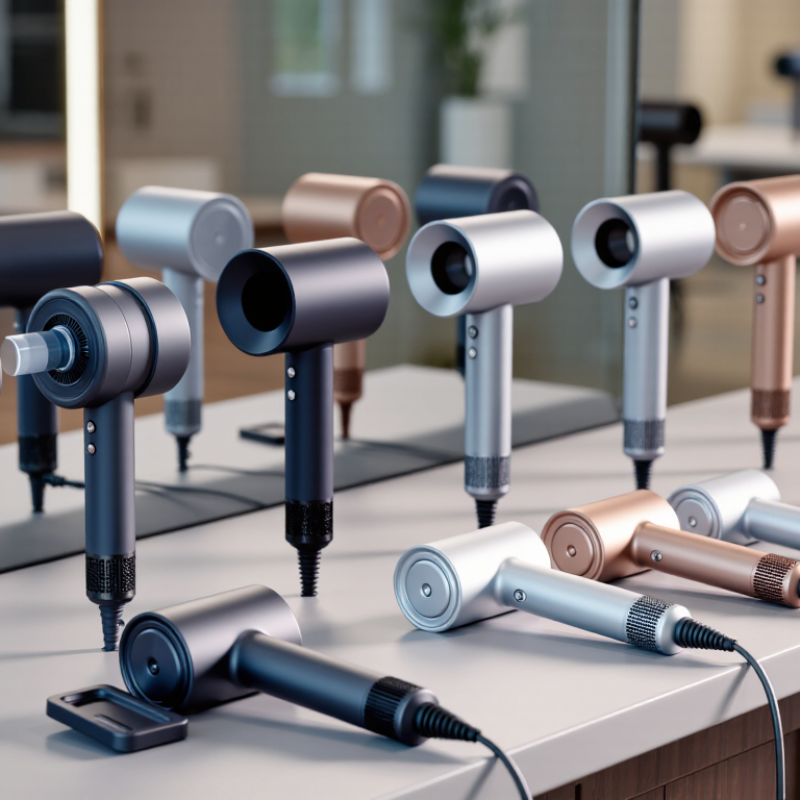
China’s Hair Dryer Manufacturing Landscape in 2026
In 2026, China’s hair dryer manufacturing landscape spans large production facilities and smaller, export-oriented workshops. Many suppliers offer several motor types, heat settings, attachments, and housing finishes. Some can customize colors or packaging, while others focus on stable, repeatable production. Details matter. A supplier’s catalog may look broad, but actual capabilities vary.
Wholesale buyers should examine how products are tested, assembled, and checked before shipment. Ask for clear specifications covering wattage, airflow settings, cord length, plug options, and included accessories. Request samples from the intended production line, not just a showroom unit. Check the housing seams, button feel, noise, and heat consistency during repeated use. One sample cannot tell the whole story. That is an easy point to overlook.
Factory visits or live video calls can reveal useful details, such as workstations, inspection steps, and packaging procedures. Buyers should also confirm production capacity, lead times, minimum order quantities, and how defects are handled. A low quote may exclude important testing or after-sales support. Compare suppliers on documented processes, not promises alone. Even then, forecasts can be wrong, and a careful buyer should leave room for delays.
2026 China Hair Dryer Manufacturing Landscape
Representative rated power by hair dryer category
The values are representative wattage examples for common product categories, not supplier-level averages or market-share data. Actual specifications vary by model and target market; wholesale buyers should confirm rated power, voltage, plug type, and applicable safety certifications with each supplier.
Types of Suppliers Serving Wholesale Buyers
Types of Suppliers Serving Wholesale Buyers
Wholesale buyers in China generally work with OEM/ODM factories, trading companies, or manufacturers with in-house component production. OEM factories make products to a buyer’s specification, while ODM suppliers offer existing designs that can be adapted. Ask for sample lead times, minimum order quantities, and clear details on motor, wattage, and temperature settings. Details matter. The categories can blur.
Trading companies may combine several product types and coordinate export paperwork, which can help buyers managing smaller orders. However, buyers may have less direct visibility into production. Factory-direct suppliers can provide closer access to assembly and quality checks, but customization may require larger orders. Grand View Research estimated the global hair dryer market at USD 9.2 billion in 2023 and forecast a 5.3% compound annual growth rate from 2024 to 2030. That market outlook signals demand, but it does not verify any supplier’s capacity or quality.
Tips: Request a recent production video and a sample from the same product specification. Compare the sample with the written quote. Check who handles defects and replacement parts. A polished sample alone proves little.
How to Evaluate Product Quality and Safety Certifications
For wholesale buyers comparing hair dryer suppliers in China, a polished catalog is not proof of consistent quality. Request samples from the exact production model, then check the plug, cord strain relief, housing seams, and switch response. Run the dryer on each setting and note unusual vibration, hot spots, or a burning smell. Small details matter.
Ask for test reports and safety certificates relevant to your destination market. Check that the document names the same model, manufacturer, and factory shown on the quotation; a certificate for a similar unit may not cover your order. Verify the issuing body and report number independently where possible. Paperwork can look convincing.
Also review protection against overheating, insulation performance, and leakage current, using a qualified testing service when risk or order size warrants it. Confirm that production units match the approved sample, and ask how the supplier handles failed inspections. One sample is only a snapshot. Batch quality can drift, especially after a component change. I would not treat a quick visual check as enough; keep inspection records and retest after meaningful design changes.
Comparing Pricing, Minimum Orders, and Customization Options
For wholesale buyers, compare landed cost, not just the unit price. A quote should separate the dryer, attachments, packaging, sample fees, and freight. Motor type, wattage, heat settings, and included nozzles can shift pricing quickly. Ask suppliers to price the same specification at 500, 1,000, and 3,000 units. This reveals where volume discounts begin. Grand View Research’s Hair Dryer Market report estimated a global market value of USD 9.2 billion in 2023, with a projected 5.1% compound annual growth rate from 2024 to 2030. That growth signals competition, but it does not guarantee low factory prices. A low quote can still disappoint.
Minimum order quantities vary with stock, color, and packaging. A standard model may have a lower MOQ than a custom shell or molded attachment. Confirm whether the sample cost is credited toward a production order, and request the MOQ for each color separately. Small details matter. Customization can range from a printed logo and carton design to changes in cord length, plug type, or accessory set. Logo printing usually adds less cost than new tooling. Ask for a written breakdown of setup fees, sample lead time, and production lead time. I would still question whether every requested feature earns its cost; custom packaging can look impressive, yet tie up cash in inventory.
Steps for Choosing and Partnering with a Supplier
For wholesale sourcing, turn “good quality” into measurable specifications before contacting suppliers. List voltage and plug type, wattage, airflow settings, noise limits, cord length, weight, and packaging requirements. Ask each supplier for a current product specification sheet, factory details, and test documentation for the exact model offered. A polished showroom is not proof. Request a production sample and check its heat consistency, button feel, cord strain relief, and packaging after a drop test.
Use the same questions with several factories: monthly capacity, minimum order quantity, sample lead time, production schedule, warranty terms, and spare-parts availability. Deloitte’s 2023 Global Chief Procurement Officer Survey found that 71% of surveyed procurement leaders named cost reduction as a priority. That is a broad procurement finding, not a hair-dryer benchmark. Still, compare total landed cost, not just the unit quote; freight, defects, and delayed shipments can erase a low price.
Before a large order, agree on written acceptance criteria, inspection timing, defect handling, and payment milestones. Consider a small pilot batch. Check whether the supplier can trace components and keep production consistent across repeat orders. Keep dated sample photos and signed specifications. It may feel overly cautious. It is useful. Review communication during the sample stage too: slow, vague replies can become a real problem when a shipment is already underway.
