Edison LED Lighting

Shop

Projects

Why Choose LED Strip Lights for Global Sourcing?

Why Choose LED Strip Lights for Global Sourcing?

Global buyers are moving toward LED strip solutions because flexibility now matters as much as brightness. The International Energy Agency’s Energy Efficiency 2023 report estimated that LEDs represented about half of global residential lighting sales in 2022. This shift creates opportunities, but it also raises sourcing questions about efficiency, heat control, color consistency, and product lifespan.

The U.S. Department of Energy’s Solid-State Lighting research reports identify efficacy, color quality, reliability, and intelligent controls as continuing industry priorities. For a sourcing team, these priorities become practical checks. A reliable Led Strip should show measured lumen output, CRI data, voltage stability, adhesive performance, and thermal test results. A strip running inside a warm aluminum channel cannot be judged by appearance alone. The brightest sample may also generate excessive heat.

Dr. Nadarajah Narendran, a recognized lighting researcher at the Lighting Research Center, has emphasized this principle: “There is no one-size-fits-all solution in lighting.” That insight applies directly to international purchasing. A 24V strip may suit a retail display, while a lower-density version may better serve decorative furniture. IP ratings, certifications, packaging, and replacement support also influence total cost.

The numbers look convincing.

Still, supplier claims deserve verification. Independent testing, production samples, and factory audits reduce avoidable risks. Global sourcing is not simply about finding the lowest quotation. It is about selecting a Led Strip that performs consistently across different climates, installations, and customer expectations. Some buyers may underestimate installation details. That remains a common weakness.
Why Choose LED Strip Lights for Global Sourcing?

What Are LED Strip Lights and How Do They Work?

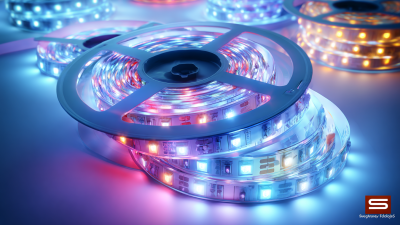
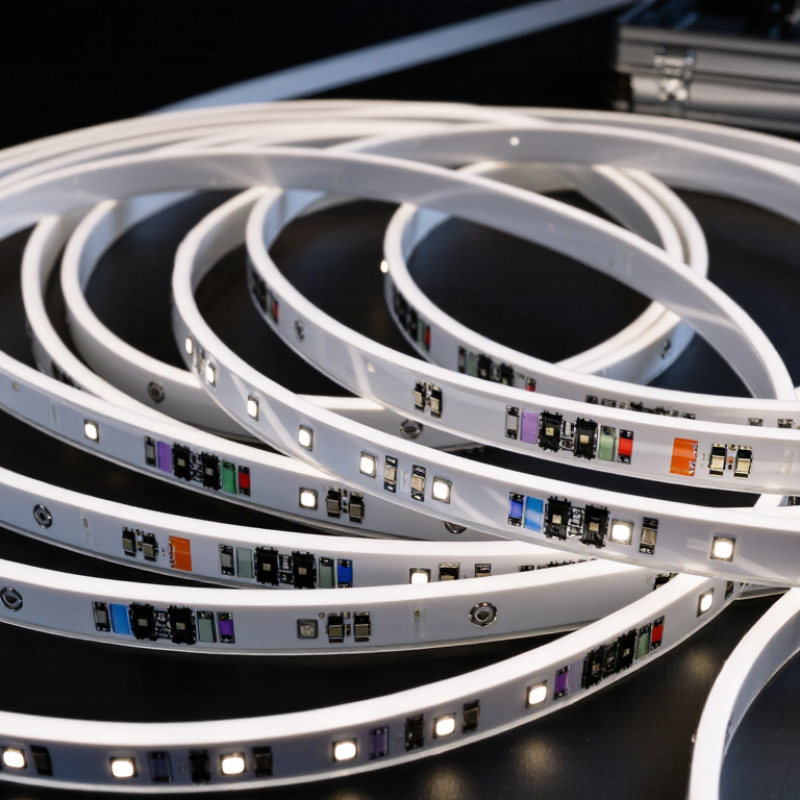
An LED strip light is a flexible circuit board carrying many small light-emitting diodes. Most models also include resistors, copper pathways, and a protective coating. The strip receives low-voltage direct current from a suitable power supply. Each diode converts electrical energy into visible light through electroluminescence. This process creates less heat than incandescent lighting, but it is not heat-free. Heat still matters. Poor airflow can shorten diode life and weaken the adhesive backing.

During sourcing checks, I examine brightness, voltage, wattage, color temperature, and cutting marks. Brightness depends on diode density, power consumption, and optical design. A 12-volt strip cannot safely use every 24-volt power supply. The power supply should match the strip’s voltage and total wattage, with reasonable reserve capacity. For retail displays, high color rendering can make products look more natural. For bedrooms, warmer light often feels less harsh. These choices are practical, not decorative details.

Water-resistant strips use coatings or sealed channels, but protection ratings need careful verification. An outdoor installation may require stronger sealing, secure connectors, and protected power equipment. I have seen attractive samples fail because the backing peeled from dusty surfaces. A sample can also hide uneven brightness between sections. That is easy to miss. Reliable global sourcing depends on testing complete assemblies, not only loose rolls. Ask for electrical specifications, aging-test records, cut-length information, and clear packaging details before placing a larger order.

Key Benefits of LED Strip Lights for Global Sourcing

Global sourcing teams choose LED strip lights because they combine efficient operation with flexible installation. The U.S. Department of Energy reports that quality LED products can use at least 75% less energy and last up to 25 times longer than incandescent lighting. However, strip performance depends on the complete system. Buyers should compare lumens per meter, wattage, color rendering, color temperature, and heat management. A bright sample is not enough.

LED strips also simplify sourcing across different projects. Suppliers can offer several voltages, cut points, waterproof ratings, and reel lengths. This helps distributors match retail, hospitality, and architectural requirements without redesigning every order. The International Energy Agency identifies efficient lighting as an important electricity-saving opportunity worldwide. DOE solid-state lighting research also shows that LED efficacy can exceed 100 lumens per watt, although finished strips often perform lower after optics, drivers, and thermal losses. Details matter.

Procurement experience shows one weakness. The lowest unit price may create higher replacement costs later. Ask for photometric reports, safety test records, batch consistency data, and clear packaging specifications. Check whether connectors fit the selected power supply. Confirm IP ratings with actual test documentation, not only product photos. Some suppliers communicate well but provide incomplete files. That risk deserves attention. A careful sourcing process should compare total ownership cost, lead time, minimum order quantity, and after-sales response before approving a factory.

Why Choose LED Strip Lights for Global Sourcing? - Key Benefits of LED Strip Lights for Global Sourcing

Sourcing Dimension Typical LED Strip Data Key Global-Sourcing Benefit Purchasing Consideration
Energy Efficiency Approximately 60–120 lumens per watt for many general-purpose strip-light configurations Lower electricity consumption can reduce operating costs and support energy-efficiency targets Compare delivered lumens per watt, not only nominal wattage
Operating Life Common rated life: approximately 30,000–50,000 hours under specified thermal and electrical conditions Fewer replacement cycles can reduce maintenance, labor, and international after-sales costs Check the stated test conditions, LED temperature, driver quality, and warranty terms
Low-Voltage Safety Most flexible strips use 12 V or 24 V DC input Simplifies integration into furniture, retail displays, vehicles, and architectural installations The power supply must match voltage, wattage, plug type, and destination-market requirements
Product Flexibility Available in single-color, tunable-white, RGB, and addressable RGB versions One product category can serve residential, commercial, hospitality, signage, and display applications Define color temperature, color accuracy, control protocol, and compatible accessories
Color Quality CRI 80+ is common; CRI 90+ versions are available for retail, hospitality, and display use Consistent color quality improves product presentation and supports application-specific lighting requirements Request test data for CRI, R9, color temperature, and color tolerance such as MacAdam steps
Cutting and Installation Cut points commonly range from approximately 25 mm to 100 mm, depending on circuit design Flexible sizing reduces material waste and supports project-specific installation layouts Verify cut-point spacing, adhesive backing, bend radius, connectors, and aluminum-profile compatibility
Environmental Protection Typical ratings include IP20 for dry areas, IP65 for splash-resistant use, and IP67/IP68 for higher protection levels Supports sourcing for both indoor and selected outdoor applications Confirm whether the rating applies to the complete assembly, including end caps, joints, and connectors
Thermal Management Aluminum channels or profiles help dissipate heat and improve light uniformity A standardized profile system can improve product reliability across multiple installation markets Avoid installing high-power strips on insulating surfaces without adequate heat dissipation
Power Planning Example: a 5-meter strip rated at 12 W/m requires approximately 60 W before adding a safety margin Clear electrical specifications make international system design and accessory bundling easier Select a power supply with suitable reserve capacity; voltage drop may require shorter runs or parallel feeds
Customization Potential Common options include PCB width, LED density, voltage, color temperature, reel length, connectors, and packaging Supports regional product specifications, private labeling, and application-specific configurations Confirm minimum order quantities, tooling charges, sample approval, and production lead time before ordering
International Compliance Applicable requirements may include electrical safety, electromagnetic compatibility, chemical restrictions, and energy labeling Early compliance planning reduces customs delays, marketplace restrictions, and redesign risks Request destination-specific declarations, test reports, labels, manuals, and packaging documentation
Packaging and Logistics Flexible reels are lightweight and compact compared with many rigid lighting products Compact packing can improve container utilization and simplify multi-market distribution Protect reels from crushing, moisture, electrostatic discharge, and excessive storage temperatures

Note: Figures are typical industry ranges and may vary by LED type, strip density, operating temperature, power supply, installation method, and applicable product standards. Always verify final specifications through samples and technical documentation.

How to Evaluate LED Strip Light Quality and Specifications

Why Choose LED Strip Lights for Global Sourcing?

How to Evaluate LED Strip Light Quality and Specifications

A reliable evaluation starts with the intended environment. Check voltage, color temperature, color rendering index, LED density, and power consumption. A bright sample can still create uneven light or excessive heat. Measure brightness at a fixed distance, not by eye alone. Look beyond brightness. A CRI above 90 often suits retail, hospitality, and residential spaces where colors must appear natural.

Inspect the flexible circuit board carefully. Wider copper paths usually manage current and heat more effectively. Check solder points, cutting marks, connector strength, and the adhesive backing. Ask for samples. Run them continuously for several hours, then inspect hot spots, flicker, and color changes. Test dimming at low levels, because some strips perform well at full power but pulse visibly near zero. This small failure is easy to miss.

Specifications should match evidence. Request a clear datasheet, production tolerance information, safety documentation, and independent test reports when available. Confirm the stated IP rating through suitable test records, especially for damp locations. Review voltage drop across the full length, not only the first meter. Lot consistency also matters; compare samples from different production batches. In practice, even a careful checklist can miss installation problems. Recheck thermal performance inside the intended profile, where restricted airflow may change the result. Small details matter.

Global Sourcing Considerations for LED Strip Light Buyers

Why Choose LED Strip Lights for Global Sourcing?

Global Sourcing Considerations for LED Strip Light Buyers

LED strip lights suit global projects because they are lightweight, flexible, and easier to install than rigid fixtures. However, sourcing decisions should begin with local requirements, not attractive catalog photos. Confirm voltage, wattage, color temperature, dimming methods, and connector types before discussing price.

Ask suppliers for current test reports and production samples. Check electrical safety, electromagnetic compatibility, energy performance, and applicable regional certifications. Requirements differ between markets. An indoor strip may need a different protection rating from one installed beneath an outdoor canopy. Look closely at the silicone coating, copper thickness, adhesive strength, and LED spacing. These details affect heat control and long-term brightness.

Request a clear specification sheet.

Reliable suppliers should explain LED binning, color consistency, lifespan testing, and warranty conditions. A factory audit, video inspection, or independent quality check can reveal packaging weaknesses and uneven assembly. Confirm minimum order quantities, sample fees, lead times, spare parts, and shipping terms in writing. Import taxes and customs delays can change the real cost significantly.

A sample is not proof.

I have seen projects pass visual inspection but fail after repeated bending or heat exposure. That is why buyers should test several batches, especially when ordering large volumes. Keep records of approvals, revisions, and agreed tolerances. A slightly cheaper strip can become expensive when installers find inconsistent color or weak adhesive on site.

Common Applications and Future Trends of LED Strip Lights

Why Choose LED Strip Lights for Global Sourcing?

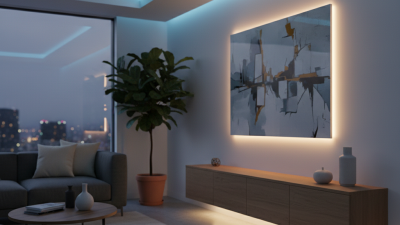
LED strip lights now serve more than decorative purposes. In homes, installers place them under kitchen cabinets, along stair edges, and inside wardrobes. Retail stores use them beneath shelves to reduce dark product gaps. Hotels often add concealed lighting around headboards and reception counters. In factories, sealed strips can illuminate work surfaces where ordinary fixtures feel too rigid.

The data supports this shift. The International Energy Agency reported that LEDs represented roughly half of global lighting sales in 2022. Grand View Research also forecasts strong growth for the wider LED lighting market through 2030, driven by energy efficiency and smart controls. These figures do not guarantee every strip project will succeed. Heat, poor adhesive, voltage drop, and inconsistent color can still create expensive installation problems. Some installations still fail.

Future designs will likely combine tunable white light, motion sensors, and addressable pixels. A warehouse may brighten only the active aisle. A restaurant may change color temperature between preparation and dining hours. Smart control systems can also record energy use and operating faults. Product development is moving toward higher efficacy, recyclable materials, and safer low-voltage systems. Yet sustainability claims need evidence. Buyers should request test reports, ingress ratings, color-consistency data, and lifetime testing before placing global orders. I would also sample different reel batches. Small color differences become obvious across a long ceiling.

Why Choose LED Strip Lights for Global Sourcing?

Common applications and future trends of LED strip lights, compared by representative power density. Higher power density is generally used when stronger illumination is required.

Common Applications

Lower-power strips are widely used for accent, cove, and decorative lighting. Medium-power products are suitable for cabinets, shelves, retail displays, and task lighting. Higher-power strips are selected for architectural, commercial, and outdoor projects.

Why Global Buyers Use LED Strips

Flexible installation, selectable color temperature, low-voltage operation, cut-to-length design, and a broad range of IP protection options make LED strips adaptable to residential, retail, hospitality, and architectural projects.

Future Trends

The market is moving toward 24V systems, high-CRI light sources, tunable white, RGBW and addressable control, improved thermal management, smart-home integration, and more efficient outdoor-ready designs.