How to Choose the Best Outdoor Led Lights for Your Space?
Choosing the right Outdoor Led Lights can transform your space dramatically. According to a report by the U.S. Department of Energy, lighting represents about 13% of a household's energy consumption. With advancements in technology, LED lights have emerged as a more energy-efficient choice. They use up to 75% less energy than traditional incandescent bulbs. This shift not only lowers your electricity bill but also reduces the carbon footprint.
Outdoor Led Lights are not just practical; they enhance safety and aesthetics. A well-lit pathway can deter intruders and provide a welcoming atmosphere. However, with so many options available, choosing the best lighting can be overwhelming. There are missteps that many homeowners make. They often overlook factors like brightness, color temperature, and design. These details are essential for achieving the desired ambiance. High-quality lights can withstand weather conditions, yet budget constraints can lead to compromises. Reflecting on these aspects will help in making a more informed decision.
Understanding Your Outdoor Space and Lighting Needs
Understanding your outdoor space is crucial for effective lighting. Different areas require varied approaches. For instance, pathways need bright, focused light for safety. An estimated 28% of outdoor accidents occur due to poor visibility at night. Thus, choosing lights that illuminate walkways well is essential.
Consider the purpose of each area. Are you lighting up a garden for aesthetics or a patio for gatherings? Studies show that ambient lighting in outdoor spaces can enhance mood and relaxation by 58%. This psychological effect underscores the importance of selecting the right illumination. Color temperatures matter, too. Warmer lights create a cozy atmosphere while cooler lights may feel more sterile.
Lastly, it’s vital to evaluate the landscape and dimensions of your space. Overly bright lights can be overwhelming. Conversely, dim lights might not serve their purpose. Use layering techniques to create depth. Spotlights can highlight features, while string lights can add charm. Understanding the dynamics of your outdoor area leads to a more harmonious lighting experience.
Types of Outdoor LED Lights Available for Various Applications
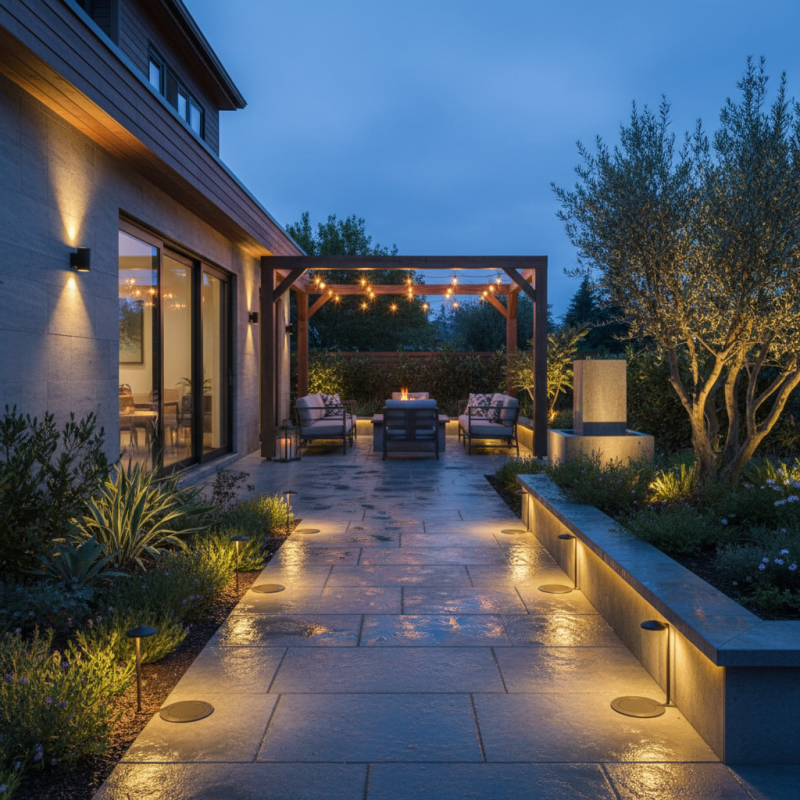
When choosing outdoor LED lights, consider the various types available for different applications. Landscape lighting enhances your garden’s beauty. You can create stunning effects with path lights. They illuminate walkways safely. Ensure they are bright enough for visibility but not overwhelming.
Flood lights are perfect for larger areas. They provide broad coverage, making them ideal for security purposes. However, placement needs careful thought. Too much light can create unwanted glare. It’s important to find a balance between visibility and comfort. Sometimes, you might place them incorrectly, causing shadows in unwanted areas.
String lights are popular for patios and outdoor gatherings. They add charm and a festive atmosphere. Although, they can sometimes be too dim for practical use. In such cases, integrating other lighting forms can enhance effectiveness. Always think about the overall ambiance you want to create. Consider that outdoor spaces vary greatly in size and use. Experimenting with different types can lead to an ideal solution.
Types of Outdoor LED Lights for Various Applications
Key Features to Consider When Choosing Outdoor LED Lights
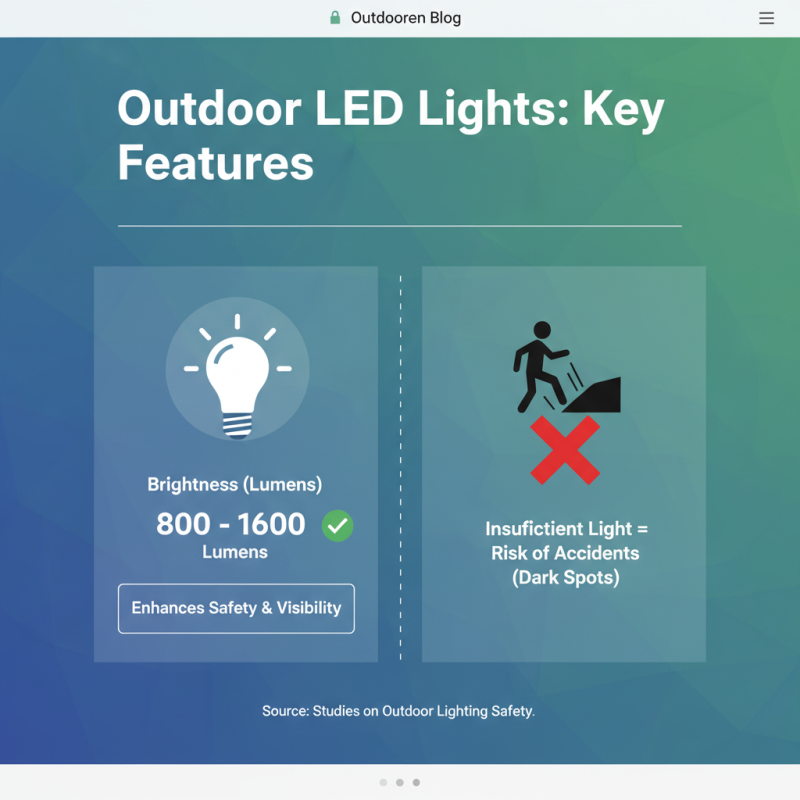
When choosing outdoor LED lights, several key features deserve your attention. First, consider the brightness, measured in lumens. For most outdoor spaces, a range of 800 to 1600 lumens is acceptable. Studies show that proper brightness enhances safety and visibility. Not enough light can create dark spots, increasing the risk of accidents.
Next, look at energy efficiency. Quality LED lights use about 75% less energy than incandescent bulbs, according to the U.S. Department of Energy. This efficient energy usage also means lower electricity bills. Additionally, the color temperature is important. Most outdoor lighting falls between 2700K to 5000K. A warmer tone (around 3000K) creates a cozy atmosphere, while cooler tones can enhance security.
Light durability matters too. Outdoor lights should be weather-resistant, with an IP rating of at least 65 to withstand rain and dust. Reflect on your specific needs. Are the lights for ambiance or security? Understanding this aids in making informed decisions. Remember, the wrong choice can lead to poor illumination and even higher replacement costs.
Evaluating Brightness, Color Temperature, and Energy Efficiency
When choosing outdoor LED lights, brightness plays a crucial role.
Measured in lumens, brightness levels vary widely. According to industry reports, a pathway light typically needs
100 to 200 lumens. For floodlights, 700 to 1,200 lumens are common.
Too bright can be glaring; too dim can be ineffective. It's essential to strike a balance. Reflecting on local needs
is critical. A well-lit space enhances safety and ambiance, but over-illuminating can
waste energy and increase costs.
Color temperature is another vital factor. Measured in kelvins, color temperatures
range from warm (2700K) to cool (6500K). Most homeowners prefer a warm white light
(about 3000K) for a cozy feel. However, a cooler light can improve visibility, especially for outdoor tasks.
The challenge? Selecting a light that suits various activities. Some spaces
may need different temperatures to serve their purpose effectively.
Energy efficiency also warrants attention. LEDs consume significantly less
energy than traditional bulbs. Reports suggest that they use 75% less energy over their lifespan.
However, not all LEDs are created equal. Some cheaper options may lack efficacy and longevity.
It's worth investing time to understand energy ratings.
Long-term savings can offset initial costs if chosen wisely. Each decision impacts both
the environment and your wallet.
Installation Tips and Maintenance for Outdoor LED Lighting
Installing outdoor LED lights can brighten your space significantly. However, improper installation can lead to dark spots or over-lit areas. Begin by planning your layout. Consider the areas you want to illuminate, like pathways or gardens. Mark these spots beforehand. Use stakes to visualize where the lights will go. This might take time, but it's worth it for a balanced look.
Check your power source before installing. Make sure it’s close enough for your lights. If you need extension cords, choose ones made for outdoor use. Pay attention to any local codes that might affect installation. Use weatherproof connectors and seals for safety. If you're unsure, consult a professional for help.
Maintenance can be simple but often overlooked. Regularly clean the fixtures to ensure maximum brightness. Dust and debris can accumulate quickly. Check for any damaged wires or bulbs. Replacing them early can prevent bigger issues later on. Adjusting the angles can also improve the lighting effect. Sometimes, your original setup might not work as planned. Be open to changing it. This flexibility can greatly enhance your outdoor atmosphere.