How to Choose Color Changing Lights for Your Home?
When it comes to enhancing the ambiance of your home, Color-Changing Lights play a vital role. According to lighting expert Sarah Thompson, "Color-Changing Lights can transform any space, creating a mood that reflects your personality." Choosing the right lights can feel overwhelming. You might be tempted by every color and feature available. Yet, it's essential to narrow down your preferences effectively.
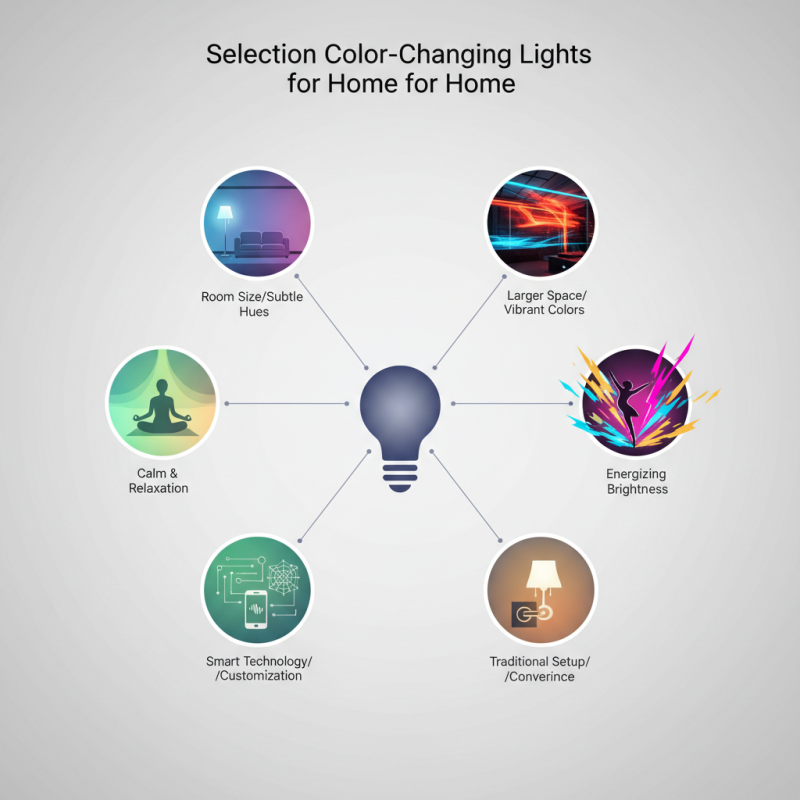
Consider your room's size and overall theme. A small room might benefit from subtle hues, while a larger space can handle more vibrant colors. Furthermore, think about the atmosphere you wish to create. Are you looking for calm and relaxation, or energizing brightness? Specific colors evoke emotions and reactions, which makes this choice critical.
Also, pay attention to the technology involved. Smart options offer customization, but may require a learning curve. Reflect on whether you want convenience or a traditional setup. Balancing functionality with aesthetics is key. Different lighting can bring out both imperfections and beauty in any space, leading to surprising results.
Understanding Color Temperature: Warm vs. Cool Lighting Options
Choosing the right lighting for your home involves understanding color temperature. Light can be categorized into warm and cool options. Warm lighting typically has a yellow or orange hue. It creates a cozy atmosphere, perfect for living rooms or bedrooms. Imagine a soft glow from a lamp in the evening. It invites relaxation and comfort.
Cool lighting, on the other hand, has a bluish tint. This type of lighting is often brighter and more energizing. It works well in kitchens or bathrooms. Think about the clarity of light when you need to perform tasks. However, too much cool light can feel harsh in some spaces. It is essential to find a balance that suits your routine.
Choosing the right temperature isn't always straightforward. Sometimes, people prefer a mix of both, adjusting their choices based on time of day. Reflect on your needs and activities throughout the day. The environment can change your mood. Color temperature impacts not only the aesthetics but also the functionality of your space.
Types of Color Changing Lights: RGB vs. Smart LED Technologies
When choosing color-changing lights, understanding the technology is essential. RGB lights are the classic choice. They mix red, green, and blue to create various colors. They work well for simple setups, like mood lighting or accent fixtures. Installation is often straightforward. However, they may lack advanced features.
Smart LED technologies represent the next level. These lights connect to your Wi-Fi. You can control them via a smartphone or voice assistant. Smart LEDs offer versatility. You can create schedules or set scenes to match your mood. The downside? They may require more setup. For some, navigating apps can be cumbersome.
Tips for choosing: Consider where you will use the lights. Is it for a party or everyday use? Then, think about how you want to control them. Sometimes, remote controls seem convenient until they go missing. Ensure the colors match your decor. Testing a few colors before committing is wise. Make sure your power outlets can handle them. Not all homes are ready for smart tech. Choose wisely and enjoy the glow.
How to Choose Color Changing Lights for Your Home? - Types of Color Changing Lights: RGB vs. Smart LED Technologies
| Type | Color Range | Control Method | Energy Efficiency | Application |
| RGB Lights | 16 million colors | Remote / Switch | Moderate | Decorative |
| Smart LED Lights | Millions via apps | Smartphone / Voice | High | Smart Home |
| Color Changing Strips | RGB | Remote / App | Moderate | Accent Lighting |
| Mood Lights | Warm to Cool | Switch / App | High | Ambient Lighting |
Evaluating Brightness: Lumens and Their Impact on Home Ambiance
When choosing color-changing lights for your home, brightness is crucial. Lumens measure brightness. The more lumens, the brighter the light. For example, a typical 60-watt incandescent bulb emits around 800 lumens. If you're aiming for mood lighting, consider a lower lumen rating around 300 to 600 lumens. This range creates a softer ambiance without overwhelming the senses.
Not every room requires the same brightness. For living rooms, aim for around 1,500 lumens total. In contrast, kitchens might need closer to 5,000 lumens for clarity. An interesting study found that light levels can influence emotions. Brighter lights may increase alertness but could also lead to anxiety in some settings. Soft, warm lights can create a cozy atmosphere. They may help in relaxation and comfort, especially in bedrooms.
Dimming options matter too. A dimmer switch can allow flexibility with brightness levels. It can transform spaces from functional to inviting. Many homeowners overlook this aspect. Testing various brightness levels in your space can be a revealing experience. You might find that what works in one area feels harsh in another. Experimenting will help you find the perfect balance for each room.
Installation Considerations: Fixtures and Compatibility with Existing Systems
When choosing color changing lights, installation is a crucial aspect. Compatibility with existing fixtures affects both performance and aesthetics. According to a report by the Lighting Research Center, nearly 25% of homeowners face challenges in matching new lighting with old systems. This can lead to inconsistent light quality.
Understanding fixture types is vital. Recessed, pendant, and wall-mounted lights have different requirements. Some systems may not support color changing features without additional adapters. Using an incompatible fixture can lead to flickering or limited color options. A survey by the American Lighting Association found that 30% of users experienced issues due to improper installations.
Pay attention to dimmer switches, too. Many color changing lights require specific types of dimmers. In fact, 40% of homeowners are unaware of this requirement. This oversight can diminish the lighting experience. Achieving the desired ambiance might remain elusive without the proper setup. Understanding these factors can transform your space effectively.
Energy Efficiency: Comparing Power Consumption of Color Changing Lights
When choosing color changing lights, energy efficiency is a key factor. These lights often come in LED varieties. LEDs are known for their low power consumption compared to traditional bulbs. For instance, an LED may use only 10 watts while producing the same light as a 60-watt incandescent bulb. This difference can lead to significant savings on electricity bills.
However, not all color changing lights are created equal. Some may claim to be energy-efficient, yet their power consumption can vary significantly. It is essential to read the specifications carefully. Look for lumens per watt; higher lumens indicate brighter light for less power. But remember, the most powerful option may not always be the best.
Choosing the right model requires some thought. Calculate how many hours you plan to use the lights. If they’re on for long periods, energy efficiency becomes even more critical. Be mindful of color settings, too. Some colors may require more power than others. This is an area that often goes overlooked. Small details can lead to larger impacts over time. Hopefully, the balance between vibrant lighting and energy savings can be achieved through careful consideration.
