Edison LED Lighting

Projects
How to Choose LED Pendant Lights for Your Business?
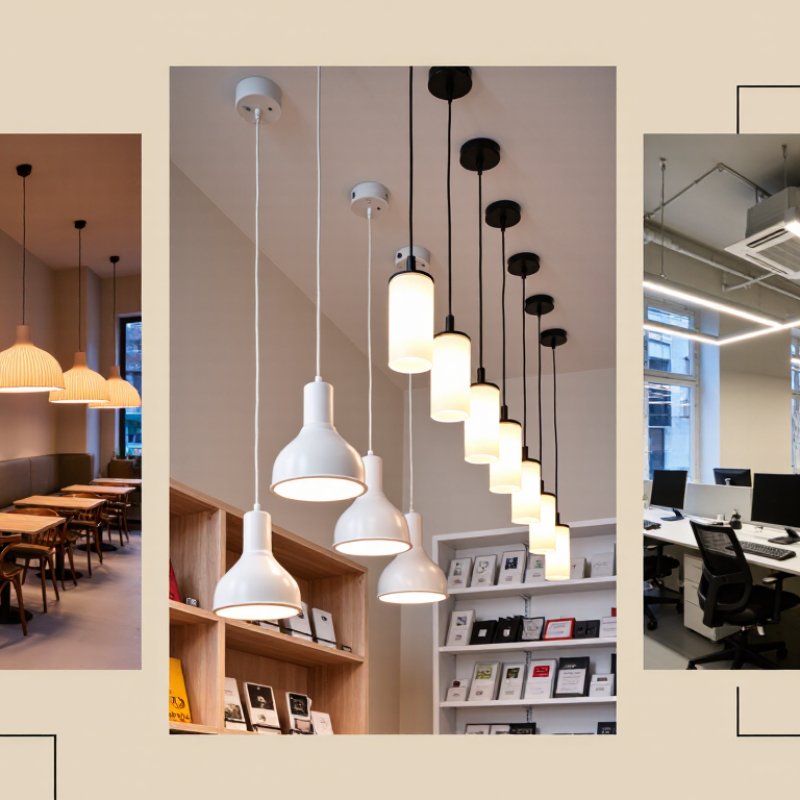
Choosing Led Pendant Lights for your business involves more than matching a fixture to your interior style. The right choice affects visibility, customer comfort, energy use, and daily maintenance. A warm pendant above a café table can make wood surfaces feel inviting, while a brighter fixture may help customers examine products accurately. Details matter.
Begin by considering the business environment, ceiling height, operating hours, and task requirements. A lighting professional can help assess beam angles, color temperature, glare control, and electrical capacity. For food service areas, sealed and easy-to-clean designs may be more practical. In retail spaces, adjustable pendants can direct attention toward displays without creating harsh reflections. Offices often need balanced light that supports concentration without tiring the eyes.
Do not judge a pendant by appearance alone. Check its lumen output, wattage, dimming compatibility, rated lifespan, and replacement process. Measure twice. A beautiful fixture may hang too low over a busy walkway or cast uneven shadows across a counter. Installation should follow local safety requirements and be completed by a qualified electrician. Reliable manufacturers should provide clear specifications, warranty information, and tested performance data.
Budget also deserves a realistic review. The cheapest option can become expensive when lamps fail early or cleaning takes too long. Still, premium pricing does not guarantee the best result. Sometimes, I have seen businesses over-light small spaces because brightness felt safer. It often made the room less comfortable. Reviewing a sample fixture at different times of day can reveal problems that product photos hide. Your final decision should balance atmosphere, performance, safety, and long-term value.
Define the Task: Set Illuminance Targets in Lux Using IES Guidance
How to Choose LED Pendant Lights for Your Business?
Define the Task: Set Illuminance Targets in Lux Using IES Guidance
Lighting selection should begin with the work, not the fixture’s appearance. IES guidance helps translate business activities into measurable illuminance targets. A café counter, retail shelf, and drafting desk require different visual conditions. Write each task beside its target lux value. Keep the measurement specific. For a reception desk, assess paperwork, screens, faces, and visitor movement. For a dining area, consider menus, food presentation, and relaxed comfort. Use relevant IES recommendations as a reference, then confirm local requirements and project conditions.
Lux describes light arriving on a surface, not lamp brightness. Measure the desk plane or counter surface with a calibrated light meter. Check several points, not one convenient spot. Uniformity matters. A bright center can hide dim edges. Pendant height changes light distribution, glare, and measured results. Record mounting height, spacing, beam spread, and surface reflectance before choosing a fixture. Include a maintenance factor for dust, aging, and cleaning intervals. I once treated an initial lux reading as proof of success; that was too simple. Occupants still noticed screen reflections and dark corners. Recheck after installation, with furniture in place and normal daylight conditions. If the target is missed, adjust spacing or dimming before adding more fixtures. Keep calculations, meter readings, and inspection dates in the project file.
How to Choose LED Pendant Lights for Your Business? - Define the Task: Set Illuminance Targets in Lux Using IES Guidance
| Business Area | Primary Visual Task | Recommended Maintained Illuminance | Suggested Initial Design Target | LED Pendant Lighting Considerations | Priority for Illuminance Accuracy |
|---|---|---|---|---|---|
| Reception and Waiting Area | Wayfinding, greeting visitors, reading, and completing basic forms | 200–300 lux | 250–375 lux | Use comfortable, evenly distributed light. Position pendants to avoid glare at seated eye level and maintain clear visibility of faces. | Standard |
| Open-Plan Office | Computer work, reading, writing, and general administration | 300–500 lux | 375–625 lux | Control reflections on screens with diffusers, suitable shielding, and balanced vertical and horizontal illumination. | High |
| Private Office | Computer work, document review, meetings, and writing | 300–500 lux | 375–625 lux | Combine ambient pendant lighting with task lighting where detailed paperwork or extended reading is required. | High |
| Conference and Meeting Room | Face-to-face communication, presentations, reading, and note-taking | 300–500 lux | 375–625 lux | Select dimmable pendants or zoned controls so the room can support presentations, collaboration, and video conferencing. | High |
| Retail Sales Floor | Product browsing, label reading, color recognition, and customer movement | 300–750 lux | 375–940 lux | Use higher levels at merchandise displays and lower, comfortable levels in circulation areas. Avoid glare on glossy packaging. | High |
| Checkout and Service Counter | Payment processing, receipt handling, product inspection, and customer service | 500–750 lux | 625–940 lux | Provide uniform light on the counter surface and the employee’s face. Avoid strong shadows from pendant placement. | High |
| Restaurant Dining Area | Dining, menu reading, social interaction, and table service | 100–200 lux | 125–250 lux | Use warm, dimmable pendants for atmosphere while maintaining sufficient light for menus, food appearance, and safe movement. | Standard |
| Commercial Kitchen and Food Preparation | Food preparation, cleaning, equipment operation, and inspection | 500–750 lux | 625–940 lux | Choose sealed, cleanable fixtures where required. Provide uniform task illumination and minimize shadows around work surfaces. | High |
| Corridors and Circulation Areas | Walking, wayfinding, door identification, and hazard detection | 100–200 lux | 125–250 lux | Prioritize continuous, uniform illumination and limit abrupt transitions between adjacent spaces. | Standard |
| Stairways | Step-edge visibility, safe movement, and handrail identification | 100–200 lux | 125–250 lux | Place pendants or supplementary fixtures to prevent shadows on stair treads and ensure consistent illumination from top to bottom. | High |
| Warehouse and Storage Area | Finding, handling, labeling, and storing goods | 100–300 lux | 125–375 lux | For tall shelving, consider vertical illumination and pendant spacing that prevents dark aisles and blocked light at rack faces. | Medium |
| Detailed Inspection or Precision Work Area | Small-part assembly, quality inspection, detailed reading, or fine visual discrimination | 750–1,000 lux | 940–1,250 lux | Use high-quality, low-glare fixtures with good color rendering and add dedicated task lighting when precision requirements are high. | High |
Related Posts
-
How to Choose LED Pendant Lights for Your Space?
-
How to Install Led Strip Lighting for Your Home Decor?
-
How to Choose the Right Linear Lighting for Your Home and Office Spaces
-

Essential Guide to Choosing the Perfect LED Ceiling Lights for Your Home
-

Top 10 LED Track Light Manufacturers from China at the 137th Canton Fair
-
Solutions for Efficient Illumination with Best Led Track Light for Global Buyers