
Choosing Spotlight Led Lights for a business is not just a brightness decision. A narrow beam can make a product display stand out, while a poorly aimed fixture can create harsh glare on glass, screens, or polished counters. Picture a customer pausing beneath a warm, focused beam to examine a watch, menu, or fabric. That small visual moment can shape how a space feels.
Lighting designer Howard Brandston is often credited with saying, “Light is the fourth dimension of architecture.” It is a useful reminder: fixtures affect the experience of a room, not just its appearance. For a practical selection, compare beam angle, light output, color temperature, and color rendering. A high CRI can help merchandise appear more true to color. Check dimming compatibility, heat management, warranty terms, and the fixture’s rating for its intended location. Details matter.
Start with the task each area must support. A boutique display may need a tighter beam than a reception desk or showroom aisle. Test samples at the actual ceiling height, and inspect them at different times of day. Look for hotspots, shadows, and reflections on nearby surfaces. Specifications help, but they do not reveal every visual flaw. That is easy to overlook. Even a well-rated spotlight can disappoint when its beam misses the target or its color feels wrong beside existing lighting. The sections that follow explain how to match Spotlight Led Lights to your layout, budget, and business needs.
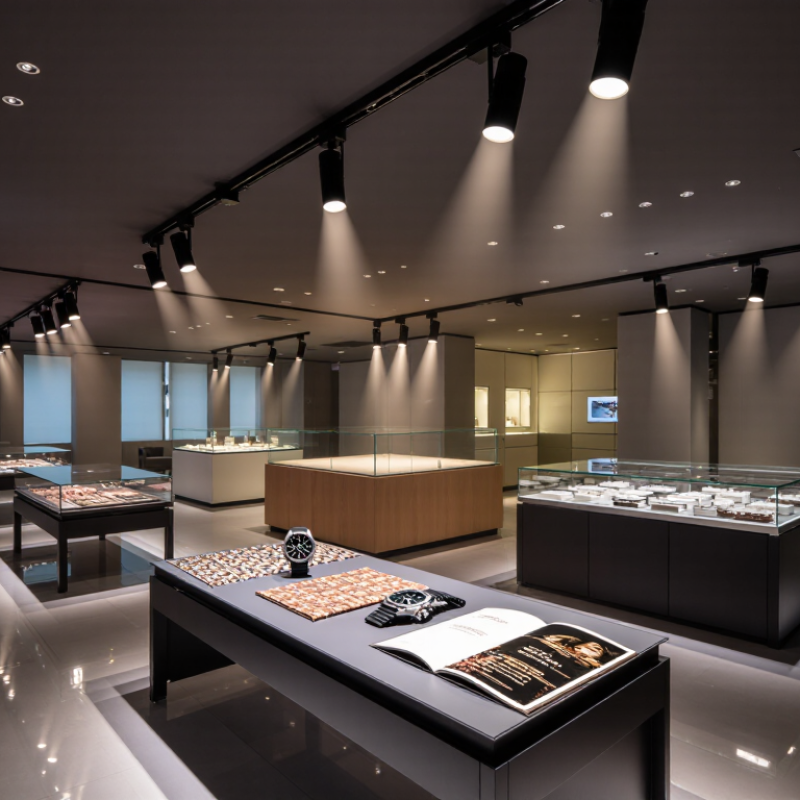
Choosing spotlight LED lights for a business starts with the task, not the fixture. A narrow beam, around 10–15 degrees, can draw attention to a small product or architectural detail. It may create harsh highlights if aimed at glossy packaging. For shelves or work surfaces, a medium beam often covers the target more evenly. A wider beam can suit a reception area, but may spill onto walls or screens.
Tips: Mark the target on the floor, then test the beam from the planned mounting height. Check the lit area from customer eye level. Small adjustments matter.
Beam angle alone does not determine coverage. At greater mounting heights, the illuminated spot grows, and brightness at the target can fall. Check the fixture’s beam data and compare it with your ceiling height and target size. I have found quick mock-ups more useful than choosing from a diagram alone; diagrams can make coverage look cleaner than it feels in a real room. Avoid aiming directly into visitors’ eyes, and watch for dark gaps between adjacent beams. If the target shifts during the day, allow for readjustment.
How to Choose Spotlight LED Lights for Your Business
Compare Output: Use DOE Efficacy Benchmarks of 100–150 lm/W
When comparing spotlight LED lights, check efficacy: lumens produced per watt consumed. Use the 100–150 lm/W DOE benchmark range as a screening reference, not a promise of performance. At 30 watts, that range suggests roughly 3,000–4,500 lumens before differences in optics and fixture design. Check whether the published figure describes the complete fixture or only its LED components. That detail matters.
A higher lm/W figure can reduce energy use, but it does not guarantee a better spotlight. Beam angle, color quality, glare, and dimming behavior affect how light works in a shop or gallery. A narrow beam can make a product display pop while leaving nearby shelves dim. Compare fixtures in the actual space when possible, and review measured output at your intended setting. Specs can be imperfect; I would not choose on efficacy alone.
Tips: Ask for tested fixture-level efficacy and lumen output. Compare lights with similar beam angles and color-rendering ratings. For example, note whether a 20-degree beam creates a bright hotspot on a sample display. Check that the dimmer works smoothly at low settings. A quick mock-up helps.
| Planning Scenario | Input Power | Assumed Luminaire Efficacy | Estimated Light Output | Example Business Use |
|---|---|---|---|---|
| Lower-output option | 10 W | 100 lm/W | 1,000 lm | Small display or focused accent lighting |
| Mid-range option | 20 W | 125 lm/W | 2,500 lm | Retail shelving or a medium-sized feature |
| Higher-output option | 30 W | 150 lm/W | 4,500 lm | Large display or higher mounting position |
| Higher-power option | 40 W | 125 lm/W | 5,000 lm | Large feature area; check glare and beam spread |
Estimated output is calculated as input power (W) × assumed luminaire efficacy (lm/W). These are planning examples, not measured product specifications. Compare tested fixture output, beam angle, mounting height, color quality, and dimming compatibility before selecting a spotlight.
For most offices, corridors, and general retail areas, specify spotlight LEDs with a color rendering index (CRI) of at least 80. This level usually renders everyday colors clearly without making every fitting a premium display light. CRI compares how a light source reveals selected colors against a reference source. It is useful, but it does not describe every aspect of visual quality.
For clothing, cosmetics, artwork, and product displays, consider CRI 90 or higher. Strong color fidelity can help customers judge shades under the light, especially warm reds that some standard CRI ratings do not fully capture. Check the product data for R9 performance, not just the headline CRI figure. Small details matter. A high CRI rating alone cannot prevent harsh shadows, glare, or uneven illumination across a shelf.
Before specifying a large order, test a sample spotlight on the actual merchandise and surrounding finishes. Compare it in the space’s normal lighting conditions, including daytime if windows are nearby. Look for natural skin tones and consistent product colors from different viewing angles. CRI does not set brightness or color temperature, so check those separately. I would not choose 90+ for every area by habit; it may raise costs without a visible benefit in a plain storeroom. Check the fittings together, too. A good specification should reflect what people need to see, not just a number on a datasheet.
In a shop, a spotlight that slowly dims can make displays look tired before the fixture stops working. Check the L70 rating, which estimates how many hours a light operates before its output falls to 70 percent of its initial level. It is not a promise that every fixture will last exactly that long. Ask for the test conditions and supporting product documentation. Heat, long operating hours, and restricted airflow can all affect performance.
UL certification is a separate safety check. Confirm that the exact fixture model carries an applicable UL mark, and verify the listing in the certification directory. A mark on a similar-looking product is not enough. This detail is easy to miss. Certification indicates testing against relevant safety requirements, but it does not replace correct installation or routine inspection.
Match the fixture to the actual ceiling and use. A spotlight above a warm display case may face different conditions from one in an open, ventilated showroom. Review the manufacturer’s installation instructions, including clearance and dimmer compatibility, before purchase. Keep the specification sheet with maintenance records; staff can compare later output with the original expectations. L70 figures can look impressively precise, yet the real room is rarely a laboratory. That uncertainty deserves attention.
Choosing LED spotlights for a business starts with the hours they run. The U.S. Department of Energy reports that LEDs use up to 75% less energy than incandescent lights. Your actual savings depend on the fixtures, usage, and electricity rates. Check the wattage of each current bulb and its LED replacement, then estimate annual use: watts saved, multiplied by operating hours and your electricity price. For example, a spotlight used above a counter for ten hours daily can add up quickly across several fixtures. Small differences matter.
Match light output before comparing prices. Look at lumens, beam angle, and color temperature; a narrow beam may suit a display shelf, while a wider one can brighten a work area. Check that the LED fits the existing fixture and works with any dimmer. Not every combination does. Keep a simple record of the old and new wattages, purchase cost, and monthly energy use. After installation, compare bills over similar periods, allowing for seasonal changes. Estimates can be imperfect. That is worth admitting. A spreadsheet may predict savings, but real results depend on daily habits and the space itself.
WhatsApp us