How to Choose the Best Office Lighting for Maximum Productivity and Comfort
In today's fast-paced work environment, the significance of effective office lighting cannot be overstated. Proper office lighting not only illuminates workspaces but also plays a crucial role in enhancing employee productivity and comfort. As organizations increasingly recognize the impact of their physical environments on worker well-being, selecting the right lighting solutions has become a pivotal aspect of office design. The right office lighting can alleviate eye strain, reduce fatigue, and elevate mood, ultimately leading to improved performance and satisfaction among employees.
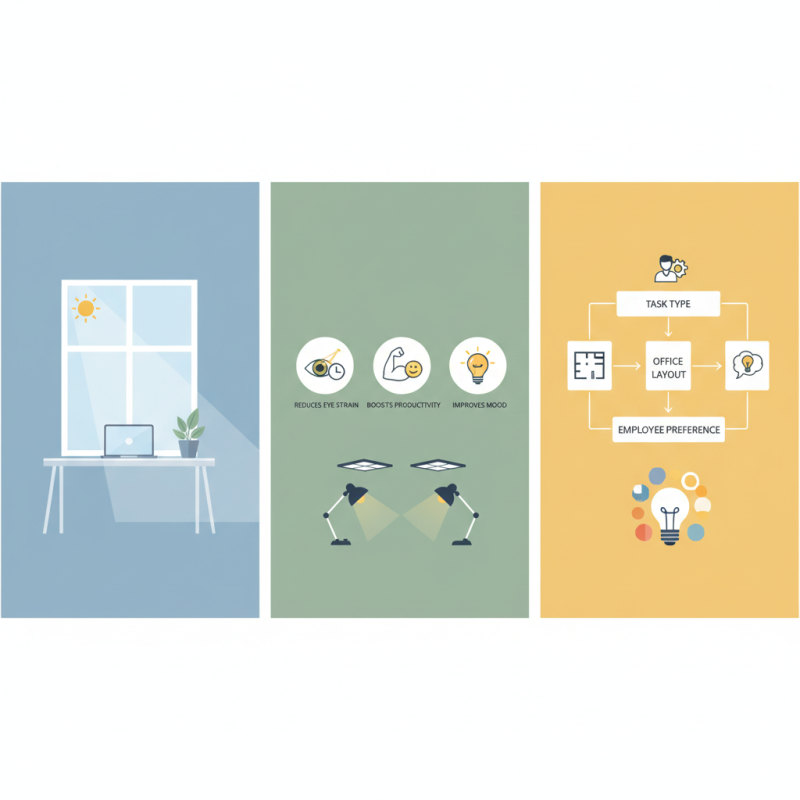
When considering office lighting, it is essential to assess various factors, including the type of tasks being performed, the layout of the workspace, and the preferences of employees. Natural light is often seen as the gold standard, promoting a sense of well-being and connection to the outside world. However, artificial lighting must also be optimized to complement daylight, ensuring that all areas of the office provide adequate brightness without creating harsh glare. By strategically choosing the best office lighting, businesses can foster an environment that not only meets the practical needs of their teams but also inspires creativity and collaboration.
Understanding the Importance of Office Lighting for Productivity
Office lighting plays a crucial role in enhancing productivity and comfort within the workplace. Studies have shown that the right lighting can significantly reduce eye strain, boost mood, and increase overall efficiency. Poor lighting conditions can lead to distractions and fatigue, making it essential to prioritize this often-overlooked aspect of office design. When selecting lighting solutions, it’s important to consider both the type and intensity of light to create an optimal work environment.
Tips: Utilize natural light whenever possible, as it has been linked to improved concentration and well-being. Position workstations near windows and use sheer curtains to diffuse harsh sunlight. Additionally, consider the color temperature of lighting; warmer tones tend to create a cozy atmosphere, while cooler tones promote alertness and focus.
Another important factor is to incorporate adjustable lighting options. Providing employees with the ability to control their personal lighting can lead to greater comfort and satisfaction. Desk lamps with brightness adjustments or overhead lights equipped with dimmers can empower individuals to tailor their lighting for various tasks, improving both productivity and comfort levels in the office.
Evaluating Different Types of Office Lighting Solutions
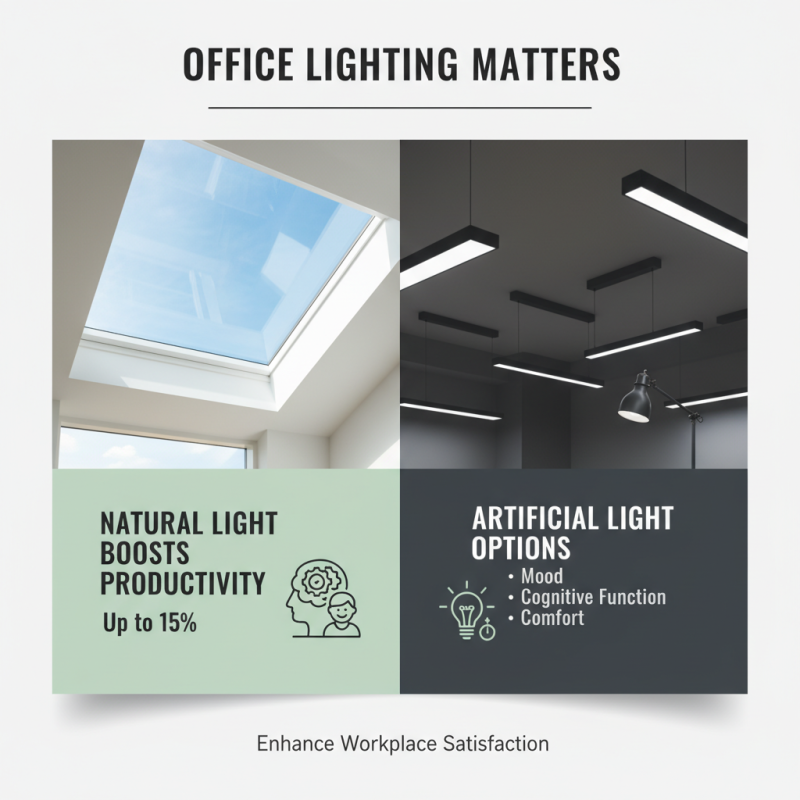
When it comes to office lighting, the choices can significantly impact employee productivity and comfort. Recent studies indicate that natural light can boost productivity by as much as 15%, promoting not only better mood but also enhanced cognitive functions. Therefore, offices that successfully incorporate windows and skylights are likely to see a substantial increase in overall workplace satisfaction. Beyond natural light, there are various artificial lighting options to consider, each with its benefits and drawbacks.
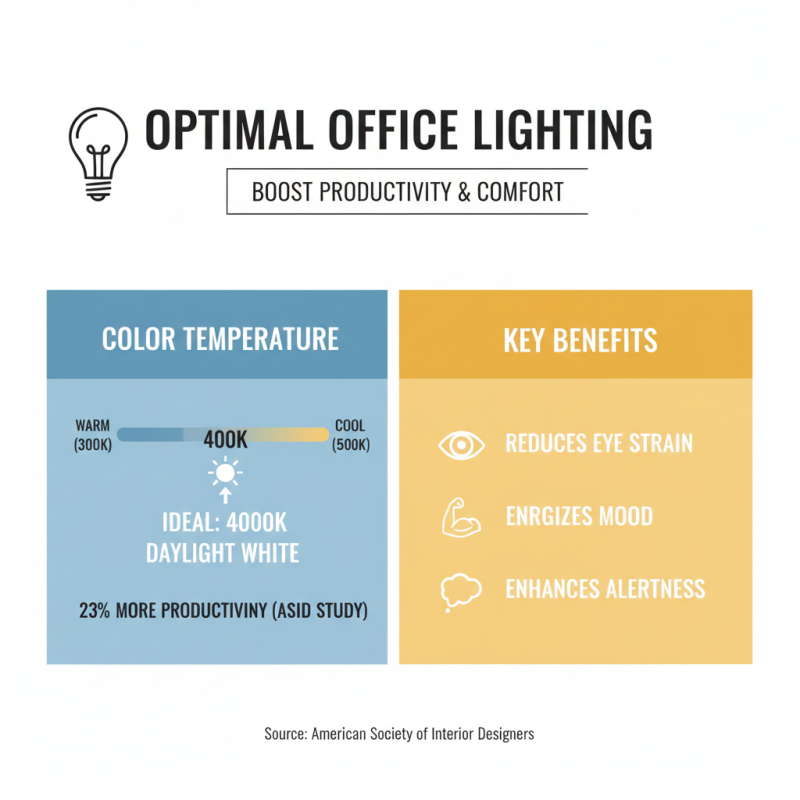
LED lighting has emerged as a popular choice due to its energy efficiency and longevity, with some models lasting over 25,000 hours. According to a report from the U.S. Department of Energy, LED lights use up to 75% less energy than incandescent lighting, resulting in lower energy costs for businesses. Additionally, proper color temperature in LED lights can create a more conducive working environment; studies show that lights around 4000K can promote alertness, whereas warmer tones can help to ease stress in areas designated for relaxation.
Task lighting is another vital aspect to consider, as it allows employees to have control over their immediate workspace. A study by the International Facility Management Association (IFMA) reveals that personalized lighting can enhance productivity by up to 20%. It’s essential to strike a balance between general, task, and accent lighting to create a versatile and comfortable office space that caters to various activities throughout the workday.
Key Factors to Consider When Selecting Office Lighting
When selecting office lighting, several key factors must be considered to enhance both productivity and comfort. First and foremost, the color temperature of the lighting plays a crucial role. Research indicates that lighting in the range of 3000K to 5000K can significantly affect alertness and mood. A study by the American Society of Interior Designers found that employees are 23% more productive when working under lights with a color temperature of around 4000K, which mimics natural daylight. Such lighting not only helps in reducing eye strain but also promotes a more energetic work environment.
Another important element is the intensity and distribution of the light. Overly bright or uneven lighting can lead to discomfort and decreased focus. According to the Illuminating Engineering Society, the recommended illuminance level for office tasks varies between 300 to 500 lux, depending on the nature of the work. Implementing a combination of task lighting and ambient lighting can help achieve optimal levels. Adjustable fixtures also offer flexibility, allowing workers to tailor brightness according to personal preference, further enhancing comfort and concentration throughout the workday.
Creating a Balanced Lighting Scheme for Comfort and Functionality
Creating a balanced lighting scheme is essential for fostering both comfort and functionality in the workplace. Natural light should be prioritized whenever possible, as it boosts mood and promotes alertness. Positioning desks near windows and using translucent window coverings can create a welcoming environment while minimizing glare. Additionally, incorporating adjustable blinds allows employees to control the amount of sunlight entering the workspace, catering to individual preferences and reducing eye strain.
In addition to harnessing natural light, artificial lighting plays a critical role in enhancing workplace productivity. A layered approach that includes ambient, task, and accent lighting can help meet different needs throughout the day. Ambient lighting offers a uniform illumination that creates a general sense of well-being, while task lighting focuses on specific areas such as desks or workstations, providing adequate brightness for detailed tasks. Lastly, accent lighting can highlight certain areas or features within the office, adding visual interest without overwhelming the space. By thoughtfully integrating these elements, a balanced lighting scheme can significantly enhance employee comfort and productivity, creating an environment conducive to work and collaboration.
Impact of Different Lighting Conditions on Productivity
Tips for Adjusting and Maintaining Office Lighting for Optimal Use
Proper office lighting is crucial for enhancing productivity and ensuring comfort in the workplace. According to a report by the International Association of Lighting Designers, optimal lighting can increase employee productivity by as much as 20%. A key factor in achieving this is to adjust the lighting based on the tasks being performed. For instance, areas where detailed work is done, such as reading or data entry, require brighter, focused light, while spaces for collaborative work can benefit from softer, ambient light.
Maintaining effective office lighting involves frequent assessment of the light sources and their output. The Illumination Engineering Society recommends a minimum illumination level of 300-500 lux for office environments, depending on the nature of the work. Additionally, adopting a combination of natural and artificial lighting can greatly enhance comfort. Natural light not only reduces energy costs but also has a significant positive impact on employee well-being and satisfaction. Regularly cleaning light fixtures and using dimmable lighting systems can help accommodate different tasks and preferences, ensuring that the office remains a productive and comfortable environment for all.