What Is Red Light Therapy for Face?
Red light therapy for the face uses low-intensity red or near-infrared light directed at the skin. At a clinic, a person may sit beneath a panel wearing protective eyewear; at home, they may hold a small LED device near their cheeks or forehead. The light is not a laser peel, and it should not feel hot or painful. The aim is to influence cellular activity, not strip away the skin’s surface.
Photomedicine researcher Michael R. Hamblin describes photobiomodulation as “the use of red or near-infrared light to stimulate, heal, regenerate, and protect tissue.” That broad description helps explain the science, but it does not promise a specific facial result. Studies have explored effects on skin texture, fine lines, and inflammation, yet outcomes depend on the device, dose, schedule, and individual skin. Evidence is still developing. That uncertainty matters.
For anyone considering Red Light Treatment Face, practical details deserve attention: wavelength, treatment time, eye protection, and consistent use. A gentle glow can look reassuring, but more exposure is not automatically better. Some devices have clearer specifications than others, and marketing language can outrun the research. People with a skin condition, light sensitivity, or photosensitizing medication should ask a qualified healthcare professional before starting. Results may be gradual, modest, or absent. And expectations need checking. A device may fit a skincare routine, but it cannot replace individualized medical care or guarantee younger-looking skin.
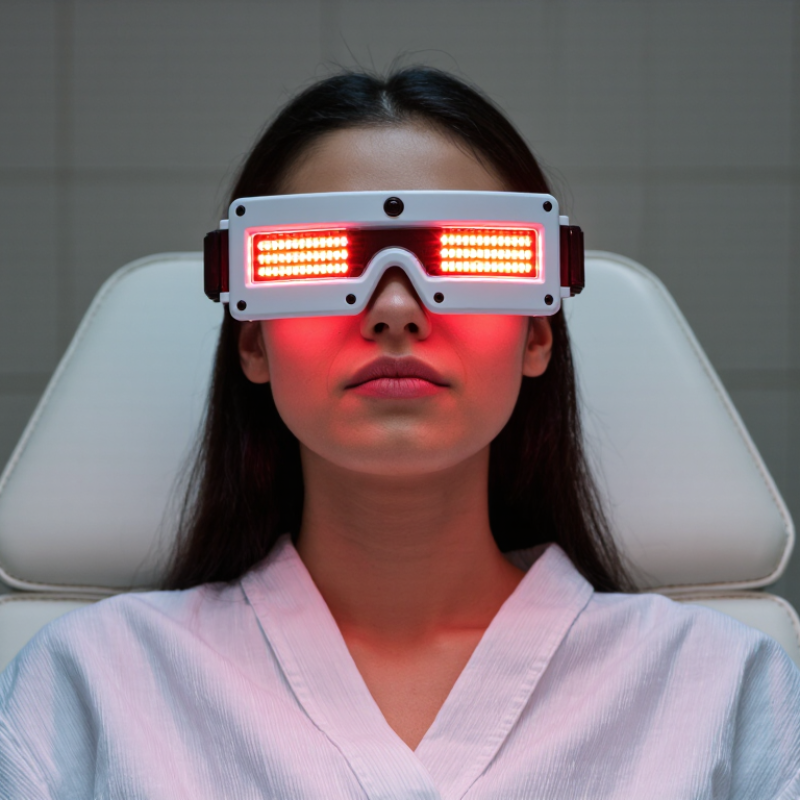
What Facial Red-Light Therapy Is: Photobiomodulation Without UV Exposure
Facial red-light therapy is photobiomodulation: skin is exposed to visible red light, often around 630–660 nanometres, without ultraviolet (UV) radiation. UV light can cause tanning and skin damage; red light is a different part of the spectrum. No tanning. Red wavelengths interact with cellular targets, and laboratory research suggests they may influence mitochondrial signaling. How strongly this affects facial skin varies, and the biological explanation is still being studied.
A controlled 2014 study by Wunsch and Matuschka, published in Photomedicine and Laser Surgery, included 136 volunteers treated with red or near-infrared light over 15 weeks. Researchers reported improvements in fine lines and skin roughness. That is useful evidence, not a promise: treatment schedules and devices differ, so results may not transfer to every home mask. Light output and distance matter. “Non-UV” also does not mean risk-free; protect the eyes as directed, and seek clinical advice if you have a light-sensitive condition or use photosensitizing medication. The terminology can sound more settled than the evidence. That gap deserves attention.
Common Device Bands: 630–660 nm Red and 810–850 nm Near-Infrared
Red light therapy for the face uses low-level light from a panel, mask, or handheld device. Common devices list red wavelengths of 630–660 nm and near-infrared wavelengths of 810–850 nm. Wavelength matters. Red light is more readily absorbed near the skin’s surface, while near-infrared light generally reaches deeper tissue. Neither band guarantees a visible change, and more wavelengths do not automatically mean better results.
Numbers alone tell only part of the story. The device’s light output, distance from the face, session length, and consistency also affect exposure. Follow the manufacturer’s instructions rather than guessing from color or brightness. A bright-looking panel does not necessarily deliver an appropriate dose. This is an easy detail to overlook. Research on light-based skin treatments is still developing, and study results can vary with device settings and treatment schedules.
Protect your eyes as directed, especially when a device sits close to the face. Start with clean, dry skin, and avoid using the device over irritated or injured areas unless a clinician advises otherwise. If you have a photosensitive condition or take medication that increases light sensitivity, ask a healthcare professional before use. Taking occasional photos in the same lighting can help you notice gradual changes, though normal shifts in skin and room lighting can make comparisons imperfect.
How Light May Affect Skin: Mitochondrial Signaling and Collagen Remodeling
Red-light therapy for the face uses low-intensity red or near-infrared light, usually from a panel or handheld device. It does not work like a peel or scrub. Instead, light reaches skin cells and may influence how they use energy. One proposed target is cytochrome c oxidase, an enzyme involved in mitochondrial activity. Researchers are studying whether this interaction changes cellular signals linked to repair. The details are still being worked out.
Collagen remodeling is one reason people explore facial light treatments. Collagen helps support skin structure, and its production naturally changes with age. Some studies suggest red-light exposure may encourage fibroblasts, the cells that make collagen, to become more active. Any changes are gradual, not an overnight tightening effect. The biology is plausible, but not fully settled.
Results can vary with wavelength, treatment time, device output, and consistent use. A warm glow in the mirror is not proof that collagen has changed. Small studies and differing treatment protocols also make results hard to compare. That uncertainty matters. Skin can react differently, especially when someone has a condition affected by light or uses photosensitizing medication. A dermatologist can help assess whether treatment is suitable and explain eye-safety guidance for a particular device.
Clinical Evidence: 633 nm and 830 nm Tested in a 76-Patient Study
A clinical study involving 76 patients tested facial light treatment at 633 nm and 830 nm. The first is red light; the second is near-infrared. These wavelengths are often examined for their effects on skin, but the numbers alone do not show whether treatment worked. The study’s methods matter: how often participants were treated, what outcomes researchers measured, and whether there was a comparison group. Those details help put any reported changes in context.
The 76-patient figure is useful, but it does not guarantee that findings apply to everyone. Skin type, treatment settings, and consistency may affect results. Photobiomodulation research explores how light may influence cellular activity, yet that mechanism does not prove a visible facial benefit. Not enough information here. Before drawing conclusions, check the full study for measured outcomes, follow-up, and limitations. A careful reading is less exciting, perhaps, but more trustworthy.
What Is Red Light Therapy for Face? - Clinical Evidence: 633 nm and 830 nm Tested in a 76-Patient Study
| Evidence dimension | Study information | What it means |
| Published clinical study | Lee SY and colleagues, “A prospective, randomized, placebo-controlled, double-blinded, and split-face clinical study on LED phototherapy for skin rejuvenation,” published in Photodermatology, Photoimmunology & Photomedicine (2007). | A peer-reviewed clinical study, rather than laboratory evidence alone. |
| Participants | 76 participants were included in the study. | The sample offers clinical evidence, but is not large enough to settle every question about effectiveness or safety. |
| Study design | Prospective, randomized, placebo-controlled, double-blinded, and split-face. | These design features help reduce bias when comparing treated skin with a control condition. |
| Light wavelengths tested | Red light at 633 nm and near-infrared light at 830 nm were assessed, including treatment using both wavelengths. | Wavelength describes the color and physical properties of the light; it does not by itself establish how effective a device will be. |
| Reported skin outcomes | The authors reported improvements in measures related to wrinkles and skin rejuvenation in the treated groups. The combined-wavelength treatment showed the strongest overall response in the study. | The findings suggest a potential benefit, but do not guarantee the same result for every person or device. |
| Evidence limitations | Results apply to the study’s participants and treatment protocol. The study does not establish that all home-use devices, treatment schedules, or light doses produce equivalent effects. | Device output, treatment distance, exposure time, and consistency can differ; further research is needed to compare protocols and long-term results. |
| Practical takeaway | Red and near-infrared LED therapy has promising but limited clinical evidence for facial skin rejuvenation. | It should be viewed as a possible supportive skin-care approach, not a proven replacement for medical care or established sun protection. |
Source: Lee SY et al. Photodermatology, Photoimmunology & Photomedicine. 2007;23(6):269–275.
Treatment Parameters and Safety: Dose in J/cm², Eye Protection, and FDA Status
Red-light facial therapy exposes skin to low-level red or near-infrared light. Dose is commonly reported in joules per square centimetre (J/cm²), but there is no single setting that suits every device or person. The basic calculation is irradiance in milliwatts per square centimetre multiplied by exposure time in seconds, then divided by 1,000. For example, 20 mW/cm² for 300 seconds delivers 6 J/cm², if the stated irradiance is accurate at the skin. In practice, those numbers can feel less tidy than they look on paper.
Follow the device instructions or a clinician’s advice; do not extend sessions to compensate for uncertain output. More is not automatically better. Use the eye protection specified for the device, especially when light is bright or close to the face. Closed eyes alone may not provide adequate protection. Never stare into the LEDs, and stop if you notice eye discomfort, unusual skin irritation, or worsening symptoms. People with light-sensitive conditions or medicines that increase light sensitivity should seek medical advice first.
FDA status depends on the specific device and its intended use. Some devices may be FDA-cleared for particular indications; clearance is not the same as FDA approval, and it does not prove that every claimed benefit is established. Check the exact device’s status and intended use in FDA records. A label can be informative, but it is not a substitute for careful dosing.
Red Light Therapy for the Face: Dose and Safety
Illustrative light-dose calculations at a constant skin-level irradiance of 10 mW/cm²
How to read this chart: Dose (J/cm²) = irradiance (W/cm²) × exposure time (seconds). At 10 mW/cm², 5, 10, and 15 minutes calculate to 3, 6, and 9 J/cm², respectively. These are arithmetic examples, not treatment recommendations; actual dose depends on measured irradiance at the skin, distance, device output, and treatment protocol.
Eye safety: Follow the device’s instructions and use its recommended eye protection. Do not stare into LEDs; extra caution is warranted around bright sources and near-infrared light, which may not appear visibly bright.
FDA status: FDA clearance is specific to a device and its cleared intended use. “FDA-cleared” is not the same as “FDA-approved,” and clearance does not establish effectiveness for every facial concern.
