
Edison LED Lighting

Shop

Projects

China Top 10 Night Vision Lens Manufacturers

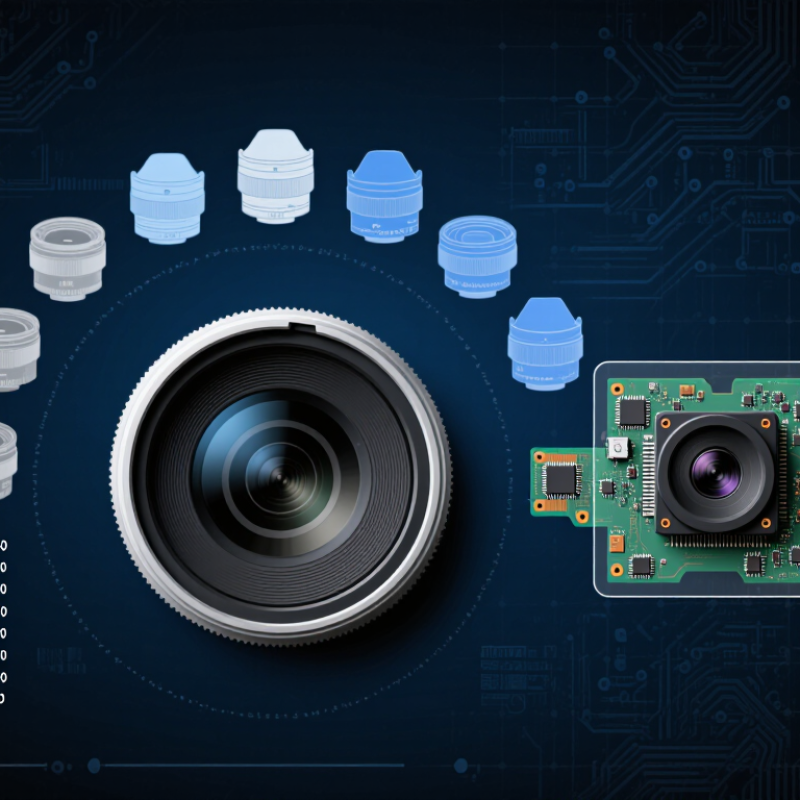
Choosing among China’s top 10 Night Vision Lens manufacturers requires more than comparing product catalogs. A lens may look impressive on paper, yet soften fine detail at the frame edges. Coatings, focal length, aperture, distortion, and sensor compatibility all shape the image. Small differences become obvious when viewing a dim tree line or a distant building.

Optical imaging scientist Dr. James R. Janesick has written extensively about imaging systems and sensor performance. A useful principle for this field is: “Night-vision clarity depends on the whole imaging chain, not the lens alone.” Treat that as a practical reminder, not a substitute for independent testing. Lens and sensor specifications must be assessed together.

This overview introduces ten Chinese manufacturers and the factors buyers can use to compare them. It considers optical design, material choices, production capability, customization, and quality-control practices. It also separates measurable specifications from broad marketing claims. Ask for test conditions, sample images, and details about compatible sensors. Check how a lens performs across the center and edges of the frame. Look for consistency between samples. Real-world performance matters.

There is no universal best lens. A compact lens for a lightweight device may not suit a fixed installation. Some specifications also reveal little without context. This guide offers a starting point for informed evaluation, not a guarantee of performance. Compare carefully.
China Top 10 Night Vision Lens Manufacturers

Night-Vision Lens Categories: 3–5 μm MWIR and 8–14 μm LWIR

China Top 10 Night Vision Lens Manufacturers

Night-vision lens categories are often divided by the infrared band they transmit: 3–5 μm MWIR and 8–14 μm LWIR. MWIR systems commonly pair with cooled detectors and can capture clear thermal detail in compact optical designs. They are used for industrial inspection, research, and long-range observation. The exact result depends on the detector, atmosphere, and lens configuration, not wavelength alone.

LWIR lenses cover longer thermal wavelengths and often work with uncooled microbolometer sensors. They can show temperature contrasts in buildings, equipment, and outdoor scenes, even when visible light is poor. A lens must match the sensor’s format, pixel pitch, and focal length. Materials, coatings, and focus stability also matter. Details matter.

For buyers comparing Chinese manufacturers, ask for transmission data across the intended band, not just a broad “infrared” specification. Check distortion, thermal focus shift, and performance at the working temperature. A neat category label can hide real trade-offs. MWIR may suit one detector and task; LWIR may be the practical choice for another. Not always. Sample images and test conditions help reveal what a datasheet leaves out.

Key Specifications: Focal Length, F-Number, MTF, and Sensor Pixel Pitch

For any China top-10 night vision lens comparison, specifications matter more than a polished catalogue. Focal length sets the field of view: a 25 mm lens covers more of a scene than a 50 mm lens on the same sensor, but renders distant details smaller. F-number matters in dim conditions. An f/1.0 lens admits twice the light of an f/1.4 lens, assuming comparable transmission. That can help preserve shutter speed, though focus tolerance becomes tighter. Check the full operating band, too; visible-light performance alone does not guarantee sharp infrared images.

MTF shows how well a lens preserves contrast at different spatial frequencies. ISO 12233:2023 describes slanted-edge methods for measuring image sharpness, while EMVA 1288 provides a framework for reporting sensor performance. Sensor pixel pitch sets a useful comparison point: a 12 μm pixel pitch has a Nyquist frequency of about 41.7 line pairs per millimeter. At that limit, lens MTF and sensor sampling both constrain detail. Small differences matter. Ask suppliers for measured MTF curves at the intended wavelength, aperture, and image-field position—not just a center value. A curve can look excellent in the middle and soften at the corners. I would treat any single-number ranking cautiously; test conditions are often not identical.

Manufacturer Ranking Criteria: R&D, Production Capacity, Quality, and Certifications

China Top 10 Night Vision Lens Manufacturers

A credible ranking should reward verified engineering, not polished catalog claims. Grand View Research estimated the global night-vision-device market at USD 7.02 billion in 2023 and forecast 8.2% annual growth through 2030. That estimate signals demand, but it does not prove any lens maker’s capability. For R&D, compare measured modulation transfer function, distortion, aperture, and performance across the stated wavelength range. Ask for test reports and sample-level results. A sharp center image is not enough.

Production capacity deserves evidence too. Check monthly output, delivery consistency, batch traceability, and how suppliers handle custom tooling. A large factory can still struggle with small-batch consistency. Quality reviews should examine incoming-material checks, coating inspection, environmental testing, and corrective-action records. ISO 9001 certification supports process discipline, while testing-laboratory accreditation can strengthen confidence in reported measurements. Neither replaces product-level verification. A practical ranking might allocate 35% to R&D, 25% to production capacity, 25% to quality systems, and 15% to relevant certifications. The weights need scrutiny; certification counts alone can mislead. Request comparable test conditions, recent audit evidence, and repeat samples before treating scores as final.

China Top 10 Night Vision Lens Manufacturers - Manufacturer Ranking Criteria: R&D, Production Capacity, Quality, and Certifications

This scorecard defines ten criteria for comparing manufacturers. It is a ranking framework, not a claim about the verified performance of any specific supplier. Supplier scores should be assigned only after reviewing current documentation and audit evidence.

Rank Evaluation Criterion Weight What to Evaluate Recommended Evidence
1 R&D Capability 18% Optical engineering expertise, design iteration, and ability to develop lenses for low-light or infrared imaging applications. Engineering team details, development records, design-change examples, and relevant test reports.
2 Optical Design and Testing 14% Ability to specify and verify relevant parameters, such as focal length, aperture, field of view, transmission, distortion, and resolution. Product specifications, inspection methods, calibrated test equipment records, and sample measurement results.
3 Production Capacity 14% Available equipment, production routes, staffing, and demonstrated ability to meet the buyer’s forecast and peak demand. Current capacity statement, equipment list, production records, and an on-site or remote process audit.
4 Process Control 12% Control of lens fabrication, coating, assembly, cleaning, and environmental conditions relevant to the product design. Process flow, work instructions, control plans, equipment-maintenance records, and process-change controls.
5 Quality Management and Traceability 10% Documented inspection, nonconformance handling, corrective action, lot identification, and traceability of supplied products. Quality procedures, sample inspection records, corrective-action examples, and a traceability demonstration.
6 Certifications and Compliance 10% Validity and scope of management-system certificates and product-specific compliance documentation applicable to the order and destination market. Current certificates checked with the issuing body, scope statements, and applicable material or compliance declarations.
7 Customization and Engineering Support 8% Ability to adapt optical or mechanical specifications, support prototyping, and manage engineering changes. Quotation assumptions, prototype plan, engineering-change workflow, and sample-development schedule.
8 Delivery and Order Management 6% Planning transparency, communication, order tracking, and demonstrated performance against agreed delivery schedules. Recent, verifiable delivery records, production planning process, and escalation procedures.
9 Materials and Supply-Chain Control 5% Control of critical optical materials, coatings, and purchased components, including management of substitutions and supply risks. Approved-supplier controls, incoming-inspection records, material documentation, and change-notification procedures.
10 After-Sales and Corrective Support 3% Responsiveness to technical questions, complaint handling, warranty terms, and support for failure analysis. Written service terms, response process, complaint workflow, and anonymized corrective-action documentation.
Total Weight 100% Suggested scoring: rate each criterion from 1 to 5, then calculate weighted points as (rating ÷ 5) × criterion weight.

Certification and compliance requirements vary by product configuration and target market; verify applicability, certificate scope, and validity before purchasing.

Profiles of China’s Top 10 Night-Vision Lens Manufacturers and Product Lines

China’s night-vision lens suppliers are best compared by optical material, focal range, and production capability—not by an unverified ranking. The ten profiles here represent distinct product lines: germanium optics for thermal imaging; chalcogenide-glass lenses; molded aspheric elements; fixed-focus surveillance objectives; compact digital night-vision lenses; wide-aperture low-light optics; zoom assemblies; multispectral lens systems; custom OEM designs; and suppliers combining coating with lens assembly. These are useful starting points, not a claim that every supplier offers every line.

MarketsandMarkets estimated the global night-vision-device market at USD 7.6 billion in 2023, forecasting USD 10.4 billion by 2028, a 6.5% compound annual growth rate. That figure covers devices, not lenses alone, so it should not be mistaken for lens-market revenue. For procurement, compare transmission across the intended wavelength band, edge sharpness, distortion, coating durability, and batch consistency. Ask for measured test data and sample images; a bright center can hide soft corners. Fit still matters. Housing tolerances and sensor size can change the result, even when the lens specification looks strong. A supplier’s catalog is a starting point, not proof of field performance.

Applications and Selection: Match Spectral Band, Field of View, and 12/17 μm Sensors

For night-vision lens selection, start with the target’s heat signature and operating conditions. ISO 20473:2007 defines near-infrared as 0.78–3 μm and mid-infrared as 3–50 μm; thermal systems commonly focus on narrower atmospheric windows, such as 3–5 μm or 8–14 μm. The right lens material and coating must transmit the detector’s band. A visible-light lens may look clear but perform poorly in thermal imaging. Check the full transmission curve, not just the lens label.

Field of view depends on sensor size and focal length. Consider a 640-pixel-wide sensor: 12 μm pixels create a 7.68 mm sensor width, while 17 μm pixels create 10.88 mm. With a 25 mm lens, the approximate horizontal fields of view are 17.5° and 24.6°, respectively. The wider view helps scan a broad area; the narrower view places more pixels across a distant target. That trade-off is easy to underestimate. At the same range, a small animal or vehicle may occupy too few pixels for dependable identification.

Compare pixel pitch alongside sensitivity, noise, and image processing. EMVA 1288 Release 4.0 specifies measurable camera characteristics such as quantum efficiency and temporal dark noise, useful for comparing sensor performance under stated test conditions. Yet laboratory figures do not capture every field condition. Fog, warm backgrounds, focus drift, and a slightly misaligned mount can change the result. Test the intended lens and sensor together, at the real working distance. A specification sheet is only a starting point.

China Top 10 Night Vision Lens Manufacturers — Applications and Selection: Match Spectral Band, Field of View, and 12/17 μm Sensors

Illustrative horizontal field-of-view (HFOV) values for a 640-pixel-wide thermal sensor, calculated from sensor pixel pitch and lens focal length. LWIR systems commonly operate in the 8–14 μm spectral band; confirm the sensor’s response and lens transmission range when selecting a lens.

A shorter focal length gives a wider field of view, while a larger pixel pitch gives a wider field of view on the same pixel-width sensor. Actual performance also depends on the sensor format, lens design, and application requirements.