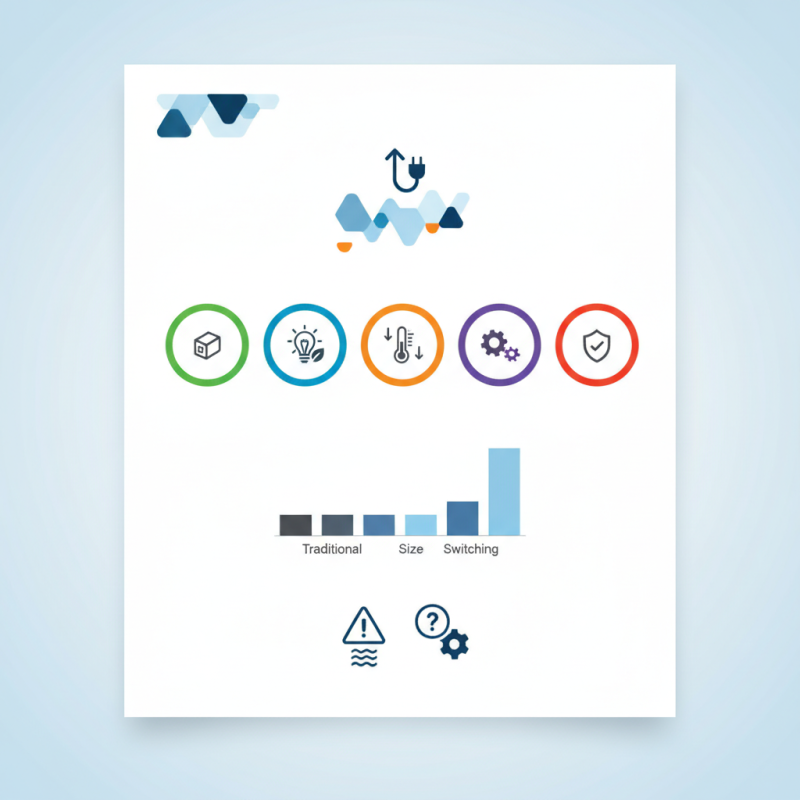
Top 5 Benefits of Switching Power Supply You Should Know?
In today's fast-paced world, choosing the right power supply is crucial. A Switching Power Supply offers several advantages that can enhance your devices' performance. As technology advances, efficiency and versatility become more important.
Switching Power Supplies are compact and lightweight compared to traditional ones. They can be integrated into various applications—from consumer electronics to industrial machines. This flexibility allows for improved design options, but it also requires careful consideration of compatibility.
Additionally, these power supplies can save energy and reduce heating issues. However, one must reflect on potential drawbacks such as electromagnetic interference. Understanding both benefits and challenges is essential when making the switch. The right choice will ultimately lead to better performance and reliability in your projects.
Understanding the Basics of Switching Power Supply Technology
Switching power supply technology has become a core component in modern electronics. At its core, it converts electrical power efficiently. This method contrasts sharply with traditional linear power supplies, which can be bulky and wasteful. Switching power supplies are compact and lighter, making them ideal for a wide range of applications. They operate through a process of voltage conversion using high-frequency switching, resulting in minimal energy loss.
One of the big advantages is versatility. Switching power supplies can handle various input voltages seamlessly. This feature makes them suitable for different regions and applications, from consumer electronics to industrial machines. However, it’s worthwhile to note that the complexity of these systems can lead to issues. If not designed properly, they may produce noise that affects nearby sensitive electronics.
Furthermore, efficiency is a double-edged sword. High efficiency means less heat and energy waste, which is great. Yet, excessive efficiency can often lead to overheating if not managed correctly. This suggests a constant need for improvement and adaptation in design. Understanding the intricacies of switching power supplies is crucial for maximizing their potential while mitigating any downsides.
Key Differences Between Switching and Linear Power Supplies
Switching power supplies (SPS) and linear power supplies (LPS) serve distinct purposes in various applications. Understanding their key differences can guide designers in making informed decisions. Switching power supplies are more efficient, operating at above 80% efficiency in many cases. They convert power through high-frequency switching, which reduces energy loss. In contrast, linear power supplies use a simple voltage drop approach. This method can waste energy, leading to heat dissipation.
One study estimated that about 30% of electronic equipment today uses switching power supplies. Their compact size is another advantage. SPS can be up to 75% smaller than typical linear supplies. However, they may introduce electrical noise due to high-frequency operation. This drawback can affect sensitive devices. Engineers often overlook this aspect during the design phase.
Additionally, linear supplies offer better electromagnetic interference performance. They provide cleaner power but at the cost of efficiency. For some applications, this purity is non-negotiable. Finding the right balance between efficiency and noise tolerance is crucial for optimal performance. Both types have their places, and the choice ultimately depends on specific requirements.
Top 5 Benefits of Switching Power Supply You Should Know
| Benefit | Description | Comparison with Linear Supplies |
| Higher Efficiency | Switching power supplies convert input power more effectively, resulting in less wasted energy. | Linear supplies often operate at lower efficiency, dissipating more power as heat. |
| Compact Size | Due to their design, switching supplies can be made smaller and lighter. | Linear supplies are typically larger, requiring more space for heat dissipation components. |
| Wide Input Voltage Range | Switching power supplies can accept a wide range of input voltages. | Linear supplies have a much narrower operating voltage range. |
| Reduced Heat Generation | Less energy wasted means less heat production compared to linear supplies. | Linear supplies generate substantial heat, necessitating larger heat sinks. |
| Cost-Effectiveness | Often, the overall cost of ownership is lower due to energy savings and smaller cooling solutions. | Linear supplies may have lower initial costs but can be more expensive in the long run. |
Efficiency and Energy Savings of Switching Power Supplies
Switching power supplies have gained popularity for many reasons. One significant advantage is their efficiency. Unlike linear power supplies, which waste energy as heat, switching power supplies convert electricity more effectively. This means less energy is lost and more is available for your devices.
Energy savings can be substantial. These power supplies operate at a higher efficiency, often exceeding 90%. Imagine the impact on your electricity bill over time. Small changes in energy consumption can lead to significant savings. However, it is crucial to choose the right design for your specific needs.
Despite these benefits, there are challenges in adopting switching power supplies. They can generate electromagnetic interference and require careful design to mitigate this issue. Additionally, while they are efficient, not all models achieve optimal efficiency under every condition. It's important to evaluate your particular application before making a switch.
Compact Design and Space-Saving Benefits of Switching Power Supplies
Switching power supplies have become a popular choice due to their compact design. Their small size not only saves space but also allows for flexible placement in various devices. For manufacturers, this is a game changer. Fewer materials are needed, leading to reduced costs and environmental impact. When it comes to crowded electronic environments, every inch counts.
The design is not flawless, though. Some people find the heat management challenging. While switching power supplies run efficiently, they do generate heat. Proper cooling solutions must be implemented to prevent overheating. This can sometimes lead to increased complexity. Balancing size and heat can require careful planning.
Despite these challenges, the benefits can outweigh the downsides. Limited space can promote innovative designs. Engineers often need to rethink layouts. This leads to creative solutions that maximize functionality. Embracing the compact advantages of switching power supplies can inspire advancements in technology. It’s an ongoing journey that continues to evolve.
Versatility and Applications of Switching Power Supplies in Modern Devices
Switching power supplies have become integral in modern devices. Their versatility allows them to adapt to various applications, from consumer electronics to industrial machinery. An industry report by Research and Markets indicates that the global switching power supply market is projected to grow at a CAGR of over 5% through 2028. This growth highlights their increasing importance in powering a diverse array of technologies.
These power supplies efficiently convert electrical energy and minimize waste. With higher efficiency ratings, they generate less heat. This is crucial for compact devices where thermal management is a challenge. However, some may overlook their limitations. The complexity of design can introduce reliability issues. A study by Power Electronics notes that while switching supplies are efficient, their failure rates can be higher in demanding environments.
The adaptability of switching power supplies also extends to renewable energy systems. They efficiently manage energy from solar panels or wind turbines. Yet, not all designs are foolproof. Many systems struggle with electromagnetic interference, affecting performance. As technology evolves, continuous improvements are needed to address these issues while maintaining efficiency.