
Edison LED Lighting

Shop

Projects

Top 10 Interactive Light Sculptures to Buy in 2026

An Interactive Light Sculpture does more than glow; it responds to a hand, a passing shadow, or a change in sound. In a quiet room, that response can feel intimate. In a busy lobby, it needs to remain clear and dependable. Buyers should look beyond dramatic photos and check the sensor type, control options, brightness, installation needs, and service support.

The market around these works is growing, though reports rarely track interactive sculptures as a separate category. Grand View Research’s 2024 Smart Lighting Market report valued that broader market at $20.17 billion in 2023 and projected a 20.7% compound annual growth rate through 2030. That figure describes smart lighting, not sculpture sales. The distinction matters. Light artist James Turrell, known for immersive works that shape how viewers perceive light, has said, “My work has no object, no image and no focus. With no object, no image and no focus, what are you looking at? You are looking at you looking.” His words point to a useful question for buyers: does the piece invite participation, or merely attract attention?

The ten selections ahead consider interaction, materials, scale, setup, and everyday usability. Some installations look effortless. Their wiring and maintenance may not be. A small caveat: specifications and availability can change, so confirm details with the seller before purchasing. Just as important, consider the room’s natural light. A striking sculpture can disappear beside a bright window.
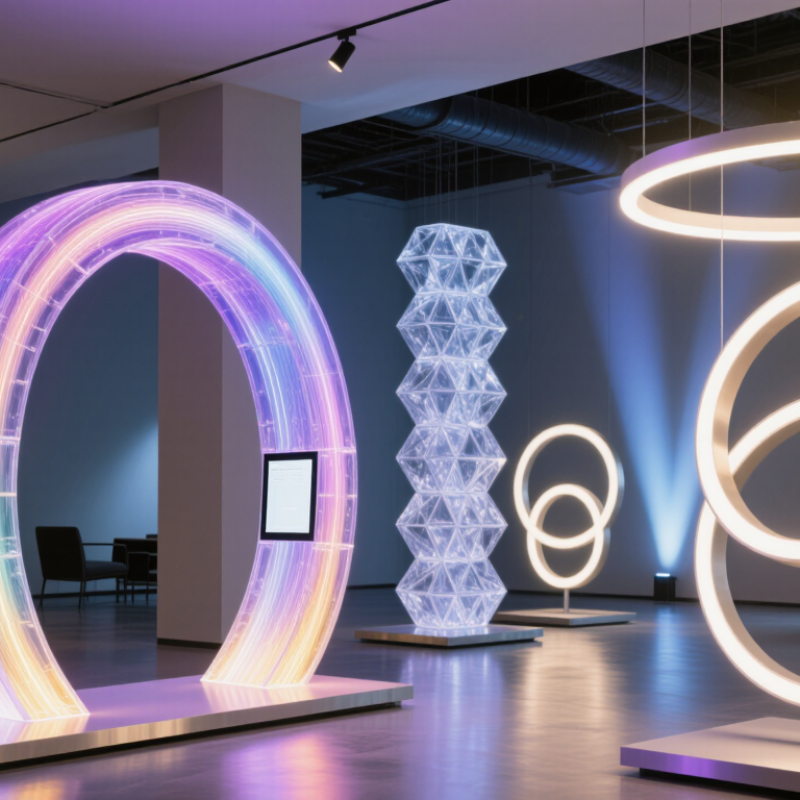
Top 10 Interactive Light Sculptures to Buy in 2026

What Defines an Interactive Light Sculpture?

An interactive light sculpture is not simply a lamp with changing colors. It is a work whose illumination responds to a person, movement, sound, touch, or nearby conditions. That response should be legible. A hand passing across a sensor might send a cool band of light along a wall. Footsteps could trigger slower pulses beneath a translucent surface. The viewer influences the piece. The piece also shapes the viewer’s attention.

For buyers, interaction means more than a novelty effect. Look for a clear input, a visible response, and a meaningful relationship between the two. Check whether sensors work from normal viewing distance, whether transitions feel comfortable, and whether controls allow a quiet mode. A sculpture may be beautifully responsive yet tiring in a small room. That matters. Energy and serviceability count, too. The U.S. Department of Energy reports that LEDs use at least 75% less energy and last up to 25 times longer than incandescent lighting. This is a useful benchmark, not a guarantee about every artwork. Ask about replaceable components, heat, and repair access. Some makers also understate setup needs. A little skepticism helps.

Criteria for Evaluating Interactive Light Sculptures

Top 10 Interactive Light Sculptures to Buy in 2026
Criteria for Evaluating Interactive Light Sculptures

Judge the interaction before judging the spectacle. Does a hand gesture trigger light promptly, or does the sculpture respond only from one narrow angle? Test it in a dim room and in daylight. Check color consistency, flicker, brightness range, and whether visitors can understand the controls without instructions. Touch matters. A beautiful demo can still mislead.

Durability and upkeep deserve equal attention. Ask about replaceable light modules, cable access, heat management, and the protection rating for the intended indoor or outdoor setting. The U.S. Department of Energy’s LED Lighting guidance says LEDs use at least 75% less energy and last up to 25 times longer than incandescent lighting. That comparison concerns light sources, not a sculpture’s full system, so review the maker’s measured power draw and warranty separately. Also confirm that sensors and control software remain serviceable.

Tips: Request a live test, not just a video. Stand at different distances and approach from the side. Note any lag, missed gestures, or glare on nearby surfaces. I would also ask for operating and maintenance instructions; buyers sometimes overlook these until a sensor needs recalibration.

Top 10 Interactive Light Sculptures to Buy in 2026

Criteria for Evaluating Interactive Light Sculptures

Suggested evaluation weights for comparing interactive light sculptures. The percentages are a proposed rubric, not measured ratings of specific products; together, they total 100%.

Ten Interactive Light Sculptures to Buy in 2026

Ten interactive light sculptures can make a room feel responsive rather than merely decorated. A touch-sensitive wall panel shifts color beneath your fingertips. Motion-reactive columns brighten as people pass, while pressure-sensitive floor tiles respond to each step. Sound-responsive rings turn music into rippling bands of light. A color-changing tabletop piece offers a quieter, hands-on option. Small rooms need smaller gestures.

For a more sculptural effect, consider a kinetic lamp whose moving parts cast changing shadows. Modular light cubes let you rearrange shapes as your space changes. A projection-based sculpture can spread patterns across a blank wall, but check how much darkness it needs. Light curtains respond to nearby movement and work well in larger spaces. A suspended interactive orb gives a room a clear focal point, while a responsive fiber-optic form creates delicate points of light. Before buying, check the controls, power requirements, materials, and cleaning instructions. Try to see the response in person, if possible; online videos can make brightness seem stronger than it is. Some effects may feel distracting after a week. That matters.

How the Sculptures Compare in Design and Interaction

Comparing ten interactive light sculptures means looking beyond brightness. Shape determines how a piece occupies a room: a narrow column suits a corner, while a low, branching form invites viewing from several sides. Diffused panels feel calm; exposed points create sharper shadows. Neither is automatically better. The right design depends on viewing distance, ceiling height, and whether the sculpture should blend in or command attention.

Interaction changes the experience more than a feature list suggests. Touch controls offer direct feedback, but fingerprints may show on glossy surfaces. Motion sensing can make a hallway feel responsive, though passing pets or curtains may trigger it. Sound-reactive modes suit gatherings, yet can become tiring in a quiet room. Look for adjustable sensitivity, a reliable manual setting, and gradual dimming. Small details matter.

For a shortlist, compare how each sculpture behaves at low brightness, not only at full output. Check whether colors stay distinct, cables can be routed discreetly, and controls remain usable without a phone. Materials also shape the impression: frosted acrylic softens edges, while metal frames make the geometry more visible. A ranking can make these trade-offs seem tidy. They aren’t. The most memorable piece may be less versatile, and that is worth admitting.

Top 10 Interactive Light Sculptures to Buy in 2026 — How the Sculptures Compare in Design and Interaction

This comparison covers commonly available sculpture formats rather than named models or makers. Size and feature ranges are indicative category-level specifications; confirm exact dimensions, controls, and installation requirements with the seller before purchasing.

Rank Sculpture Format Typical Size Design and Visual Effect Interaction Light and Control Best Suited To Buying Considerations
1 Touch-responsive tabletop sculpture 20–45 cm tall; 15–35 cm wide Compact glass, acrylic, or translucent-resin form; often produces a softly diffused glow. Touching the base or surface changes brightness, color, or preset scenes. LED light source; commonly powered by a plug-in adapter, with touch controls. Desks, shelves, bedside tables, and small living spaces. Check whether color adjustment is continuous or limited to preset modes, and whether the touch sensor can be disabled.
2 Motion-responsive floor sculpture 90–160 cm tall; 25–55 cm base width A vertical, freestanding form designed to create a noticeable glow in a room. A proximity or motion sensor triggers a change in light, color, or animation. LEDs with sensor-based control; typically mains powered. Entryways, corners, gallery-style rooms, and hospitality interiors. Confirm sensor range, response delay, stability, and whether pets or passing traffic may trigger it.
3 Sound-reactive light sculpture 30–100 cm tall; 20–60 cm wide Layered rods, fins, or translucent elements create a changing visual pattern. A built-in microphone responds to nearby sound, such as music or conversation. LEDs with microphone-based or audio-input control; power is usually supplied by an adapter. Music rooms, creative studios, and social spaces. Ask whether sensitivity is adjustable and whether the microphone can be muted for quiet environments.
4 App-controlled modular light sculpture 30–120 cm across, depending on the arrangement Multiple geometric light elements can be arranged as a wall or tabletop composition. Scenes, colors, and schedules are selected through a mobile application; some formats allow modular expansion. LED modules; commonly controlled through a wireless connection and powered from a wall outlet. Feature walls, home offices, and adaptable display areas. Check module compatibility, connection requirements, app support, and whether the system works without an internet connection.
5 Kinetic LED sculpture 40–150 cm tall or wide Moving arms, panels, or suspended elements combine mechanical motion with changing light. Motion may follow a programmed cycle, respond to a sensor, or be adjusted by a controller. LED lighting paired with a motor or actuator; generally requires mains power. Showcase interiors, studios, and spaces where movement is part of the display. Review moving-part clearances, noise level, maintenance instructions, and safe placement away from children or pets.
6 Interactive light column 100–200 cm tall; 15–40 cm diameter A vertical illuminated column gives an even, architectural wash of color. Touch, proximity, or button controls may change the column’s color or lighting pattern. LED array with electronic control; typically mains powered. Reception areas, corridors, and larger residential rooms. Measure ceiling height and floor space; verify the base footprint, cable route, and mounting or tip-resistance provisions.
7 Fiber-optic interactive sculpture 30–120 cm tall; 20–80 cm wide Fine illuminated strands create a point-like, starry effect with a distinctive tactile appearance. Depending on the design, touch or motion can alter the lighting sequence or color. Light source feeds fiber-optic strands; the illuminator usually needs electrical power. Low-light lounges, sensory rooms, and decorative installations. Check strand materials, cleaning guidance, replaceable light-source parts, and any limits on handling.
8 Projection-based interactive sculpture 30–100 cm for the unit; requires a suitable projection surface A sculptural housing combines with projected patterns to create a larger visual field. Camera, motion, or gesture input can change projected imagery in response to a viewer. Uses a light projector and electronic sensing; normally requires mains power and controlled ambient light. Media rooms, exhibitions, and dedicated display spaces. Confirm throw distance, image size, room-light requirements, software compatibility, and whether projection surfaces are included.
9 Solar-powered outdoor light sculpture 40–180 cm tall; varies by design Weather-oriented forms use illuminated panels, globes, or cut-out surfaces as garden features. Common responses include dusk activation, motion detection, or user-selectable lighting modes. LEDs with rechargeable battery and solar panel; some designs also provide a charging port. Gardens, patios, and paths with suitable exposure to daylight. Verify the weather-resistance rating, battery replacement options, winter performance, and required daily sunlight.
10 Programmable light sculpture with external control 30–150 cm across; configuration varies Pixel-like segments or individually controlled light points produce detailed, customizable patterns. Users can select or create sequences through a controller or compatible software. Addressable LED elements; may use a dedicated controller and mains power. Creative studios, event displays, and buyers who want to customize light sequences. Check setup complexity, supported control protocols, included software, update support, and whether programming requires technical experience.

Power, Placement, and Installation Requirements

When comparing interactive light sculptures, check the power plan before choosing a location. A compact piece may still need a nearby outlet and clear floor space for its sensors. Measure the full footprint, including the base, cable path, and room needed for visitors to move around it. Measure twice. Avoid placing a sensor directly beside a sunny window or busy doorway; changing light and constant movement can affect interaction. A dark wall often makes colors easier to see, while glossy floors may create distracting reflections.

Confirm the sculpture’s voltage, plug type, and power draw against the room’s available supply. For a permanent installation, have a qualified electrician review the circuit and any fixed wiring. Keep cables away from walking routes, and use only equipment rated for the intended indoor or outdoor conditions.

Check mounting points, weight, and ventilation needs before installation. Not glamorous, but important. For outdoor placement, verify the manufacturer’s stated weather rating rather than assuming a sealed-looking case can handle rain. Leave access to switches and service panels, too. One detail is easy to miss: the best position during setup may feel cramped once people gather around it. A small trial placement can reveal that problem before drilling or securing anything.