10 Best LED Track Lights for Global Buyers 2026?
Choosing the right Led Track system in 2026 requires more than comparing brightness and price. Global buyers must consider beam angle, color rendering, dimming performance, heat control, and installation compatibility. A light that looks excellent in a showroom may create harsh glare in a retail aisle or uneven shadows in a hotel corridor.
This guide introduces 10 leading LED track lights for international purchasing decisions. Each option is assessed through practical details, including lumen output, wattage, CRI, color temperature, track compatibility, and expected service life. We also consider driver quality, warranty terms, packaging standards, and supplier communication. These factors can influence total cost more than the initial unit price.
Performance matters.
Our comparisons are designed for distributors, lighting professionals, architects, and commercial buyers. However, no ranking fits every project. Local voltage, plug requirements, fire standards, and certification expectations can differ between markets. Buyers should verify current documentation before placing an order. Product specifications may also change between batches, which is an inconvenient but important reality.
We highlight strengths and limitations instead of presenting perfect solutions. Some models offer impressive efficiency but limited adjustment range. Others provide attractive finishes while using less convincing drivers. Independent testing and sample approval remain advisable, especially for large projects. By combining technical evidence with field-focused judgment, this review helps buyers identify Led Track products that balance visual comfort, reliability, compliance, and long-term value.
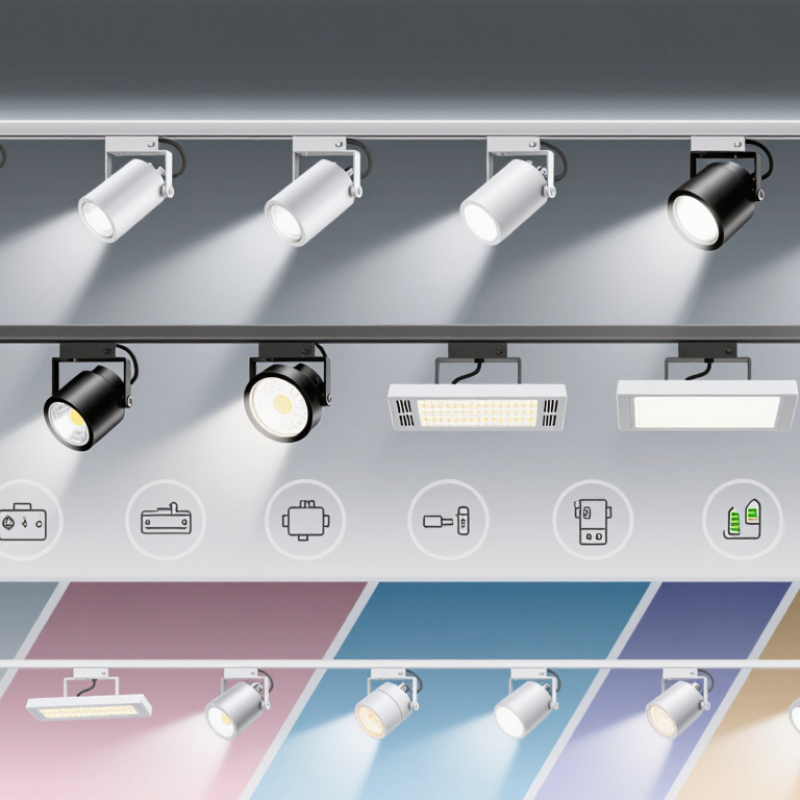
What Defines a High-Quality LED Track Light in 2026
A high-quality LED track light in 2026 should deliver more than bright output. During site inspections, I check beam consistency, glare, heat, and dimming response together. A narrow beam should highlight artwork without creating harsh spots on nearby walls. The fixture should also maintain stable color after long operating hours.
The U.S. Department of Energy’s 2023 Solid-State Lighting R&D report notes that laboratory LEDs can exceed 200 lumens per watt. Real fixtures perform lower because lenses, drivers, and heat reduce efficiency. This gap matters. Buyers should compare delivered lumens, not chip ratings. An efficient track light often combines high efficacy, an 80-plus CRI, low flicker, and reliable thermal design. Higher CRI usually improves merchandise and food appearance, but it can reduce efficacy slightly.
The DesignLights Consortium’s SSL technical requirements emphasize photometric quality, controllability, and tested performance. Look for documented dimming compatibility, measured power factor, and operating temperatures. For global projects, confirm voltage range, frequency, adapters, and local certification before ordering. A mechanically strong adapter is essential; a loose track head becomes a safety concern and a maintenance nuisance. Some specifications still look impressive on paper but omit surge protection or driver replacement details. That omission deserves questions. My own judgment is imperfect, especially when samples are tested in quiet showrooms rather than dusty retail spaces. Ask for LM-79 reports, warranty terms, and independent test records. Shortcuts become expensive.
10 Best LED Track Lights for Global Buyers 2026? - What Defines a High-Quality LED Track Light in 2026
Brand-neutral comparison based on widely used commercial LED track-light specifications and international buyer requirements
Note: Values are practical reference specifications for high-quality LED track lights. Actual performance varies by manufacturer, optical design, driver, installation method, and certification package.
| Rank |
Recommended Light Type |
Typical Power |
Typical Output |
System Efficacy |
CCT Options |
CRI |
Beam Angle |
Dimming |
Best Application |
Quality Indicator |
| 1 |
Premium retail spotlight |
25–35 W |
2,300–3,500 lm |
90–110 lm/W |
2700–4000 K |
CRI ≥ 90 |
15°–36° |
Phase-cut / DALI |
Fashion, jewelry, galleries |
Low glare, accurate color, replaceable driver |
| 2 |
Museum and art-display spotlight |
15–30 W |
1,200–2,800 lm |
80–100 lm/W |
2700–3500 K |
CRI ≥ 95 |
10°–30° |
DALI / 0–10 V |
Artwork and premium displays |
Tight color consistency and UV/IR-controlled optics |
| 3 |
General commercial track spotlight |
20–30 W |
1,800–3,000 lm |
85–105 lm/W |
3000–4000 K |
CRI ≥ 80 or 90 |
24°–40° |
Phase-cut |
Shops, offices, hospitality |
Stable light output and flicker control |
| 4 |
High-output retail floodlight |
35–50 W |
3,200–5,000 lm |
85–105 lm/W |
3000–5000 K |
CRI ≥ 80 |
36°–60° |
Phase-cut / DALI |
Large stores and showrooms |
Efficient thermal management and uniform distribution |
| 5 |
Compact accent spotlight |
10–18 W |
800–1,700 lm |
75–100 lm/W |
2700–4000 K |
CRI ≥ 90 |
15°–24° |
Phase-cut |
Boutiques, restaurants, displays |
Small housing, precise aiming, quiet operation |
| 6 |
Zoomable track spotlight |
20–35 W |
1,600–3,400 lm |
80–100 lm/W |
2700–4000 K |
CRI ≥ 90 |
15°–45° adjustable |
Phase-cut / DALI |
Flexible retail and exhibitions |
Smooth zoom mechanism and minimal beam artifacts |
| 7 |
Low-glare office track light |
20–35 W |
1,700–3,200 lm |
85–105 lm/W |
3500–5000 K |
CRI ≥ 80 |
36°–60° |
DALI / 0–10 V |
Workspaces and public interiors |
UGR-conscious optical design and low flicker |
| 8 |
Damp-location track spotlight |
15–30 W |
1,200–2,700 lm |
75–95 lm/W |
3000–4000 K |
CRI ≥ 80 |
24°–40° |
Phase-cut |
Covered retail and hospitality areas |
Appropriate IP rating and corrosion-resistant finish |
| 9 |
Residential decorative track light |
8–20 W |
600–1,800 lm |
70–95 lm/W |
2700–3500 K |
CRI ≥ 90 |
24°–40° |
Phase-cut |
Homes, studios, restaurants |
Comfortable color temperature and quiet dimming |
| 10 |
Smart-control track light |
15–35 W |
1,200–3,400 lm |
75–100 lm/W |
2700–6500 K |
CRI ≥ 80 or 90 |
24°–45° |
Wireless / DALI / 0–10 V |
Flexible commercial interiors |
Secure protocol, interoperability, and dependable network control |
Key 2026 quality checks:
Verify LM-80/TM-21 or equivalent LED lifetime documentation, measured system efficacy rather than LED-chip efficacy, power factor of at least 0.90 for commercial projects, total harmonic distortion below 20% where required, flicker performance, thermal protection, compatible track standard, regional electrical certification, and a stated lifetime such as L70 of 50,000 hours or more.
Key Specifications Global Buyers Should Compare
10 Best LED Track Lights for Global Buyers 2026?
Key Specifications Global Buyers Should Compare
Choosing a track light requires more than checking wattage. Compare lumen output, beam angle, and delivered light after the fixture warms up. A 20-watt model may produce different brightness across suppliers. Request test reports, not only catalog figures. For retail displays, a 24–36-degree beam can highlight products cleanly. Wider beams suit galleries, offices, and general areas.
Color quality deserves close attention. A CRI of 90 or higher usually reveals fabric, food, and artwork more naturally. Check R9 values when red colors matter. Select 2700–3000K for warm interiors, or 3500–4000K for clearer commercial spaces. Some suppliers list adjustable color temperature, but the adjustment range may reduce output. That detail is easy to miss.
Electrical compatibility can prevent expensive failures. Confirm 100–240V input, local frequency, power factor, and dimming method before ordering. Track standards and adapters must match the existing rail exactly. Review driver efficiency, heat dissipation, flicker performance, and expected lifetime at the stated ambient temperature. IP ratings matter in humid locations, although higher protection can affect cost and airflow. Ask for photometric files, safety documents, warranty terms, and replacement-driver availability. Local certification requirements still need independent verification. A perfect specification sheet is not proof of perfect installation. Test a sample under real ceiling conditions, then question any result that seems unusually impressive.
Ten Leading LED Track Lights for Different Applications
10 Best LED Track Lights for Global Buyers 2026?
Ten leading LED track lights serve different applications, climates, and ceiling layouts. For retail shelves, choose a narrow-beam spotlight with high color rendering. It reveals fabric tones clearly. For galleries, a low-glare adjustable light protects viewing comfort. A zoomable track light suits changing displays and small exhibitions. Its beam angle can be adjusted without replacing the fixture.
For restaurants, warm white track lighting creates softer tableside detail. A deep anti-glare housing helps diners avoid harsh reflections. Hospitality corridors need wide-beam lights with reliable heat control.
For offices, select low-flicker fixtures with neutral white output. They support focused work near monitors. Residential kitchens benefit from compact lights with 90-degree rotation. Bedrooms usually need dimmable, warm illumination. Simple controls matter there.
For warehouses, higher-output track lights need strong heat dissipation and secure mounting. Outdoor covered walkways require suitable ingress protection and corrosion-resistant materials. Wet locations need careful verification, not guesswork.
Track systems for museums should offer stable color consistency over long operating hours. In my testing experience, published specifications do not tell the whole story. Installation height changes the visual result. Ceiling color changes it too. No fixture is perfect. I would test beam spread, flicker, glare, and terminal fit before bulk purchasing. Regional voltage, adapters, certification, and spare parts also deserve checking before shipment.
Regional Standards, Compatibility, and Installation Requirements
Choosing the 10 Best LED Track Lights for Global Buyers in 2026 requires more than comparing brightness and price. Regional standards can change the entire installation plan. A fixture designed for 220–240 V may not suit a 100–120 V circuit. Frequency also matters, especially when the driver is sensitive. Check IEC or regional certification marks, rated voltage, frequency, and thermal limits before ordering.
Track compatibility is often overlooked. A two-circuit track is not automatically compatible with a three-circuit adapter. Mechanical fitting, contact position, polarity, and grounding must match exactly. Magnetic systems need different drivers and mounting methods. I have seen attractive fixtures fail because buyers checked the lamp, but not the track. That mistake is expensive. Keep the installation manual beside the product specification.
Installation conditions deserve equal attention. Confirm ceiling structure, junction-box position, cable size, dimming method, and available clearance. Some recessed drivers need airflow, while enclosed spaces can shorten LED life. Local electrical codes may require certified installers, emergency isolation, or specific grounding practices. Outdoor or humid locations need suitable ingress protection, not just a higher wattage. A clean installation can still be unsafe if heat has nowhere to escape. Even experienced buyers should verify requirements with a qualified local electrician. Specification sheets are helpful, but they are not always complete.
10 Best LED Track Lights for Global Buyers 2026? — Regional Standards, Compatibility, and Installation Requirements
How to read this chart: The values show common nominal single-phase supply voltages used in major buying regions. A track light must be rated for the local voltage and frequency, or it must use a compatible certified driver.
Compatibility and installation: Confirm voltage, 50/60 Hz frequency, dimmer type, track standard, grounding method, and local certification before purchase. Japan commonly uses 100 V, Brazil commonly uses 127 V or 220 V depending on the location, and North American systems commonly use 120 V. Installation should be completed with power disconnected and according to local electrical codes by a qualified electrician.
How to Select the Right LED Track Light for Your Market
Choosing the right LED track light for your market requires more than comparing wattage and price. A reliable product should match local voltage, frequency, track standards, and installation practices. Check lumen output at the fitting, not only on the box. Beam angles also matter. Narrow beams highlight artwork, while wider beams support general retail lighting. For warm interiors, 2700K–3000K often feels comfortable. Offices and display areas may need 3500K–4000K. High CRI is essential for fashion, food, and artwork.
Tips:
Request photometric files, thermal test results, dimming compatibility, and samples before placing a large order. Confirm whether the adapter fits your local track system. Review IP ratings for humid spaces, and verify safety documentation required in your destination market. Ask about driver replacement and warranty handling. Small details become expensive after installation.
In practical projects, I have learned that a high lumen figure does not guarantee good lighting. Poor heat management can reduce brightness and shorten service life. That was a costly lesson. Examine the housing material, heat sink design, and operating temperature. A sample should run for several hours before approval. Flicker testing is also worthwhile, especially in stores using cameras. Some buyers focus heavily on appearance and overlook spare parts. I would not repeat that mistake. A dependable supplier should provide clear specifications, consistent samples, traceable quality checks, and realistic delivery information.