Edison LED Lighting

Shop

Projects

What Are the 2026 Best LED Lighting Solutions?

Choosing the 2026 best Led Lighting Solutions requires more than comparing brightness and price. Real performance depends on efficiency, visual comfort, controls, durability, and application.

Dr. Nadarajah Narendran, a respected solid-state lighting researcher, has said, “LEDs give us the ability to control light in ways we never could before.” That flexibility now shapes offices, warehouses, retail spaces, streets, and homes. A strong solution can reduce energy use while creating cleaner, safer, and more comfortable environments. However, efficiency alone is not enough. A very bright fixture may still produce harsh glare, uneven illumination, or distracting reflections on a monitor.

The most reliable 2026 options should offer high efficacy, accurate color rendering, suitable color temperature, and dependable thermal management. Look for clear data on lumen maintenance, warranty terms, driver quality, and compatibility with sensors or smart controls. In a warehouse, optics should place light on aisles instead of wasting it on ceilings. In a hotel, warm, low-glare illumination may matter more than maximum output. Details change everything.

Some predictions about LED adoption will prove too optimistic. Product lifecycles are not always as long as marketing suggests. Installation quality can also weaken excellent equipment. That is worth remembering. This guide examines practical Led Lighting Solutions through measurable performance, user experience, maintenance needs, and long-term value. The best choice may not be the brightest fixture. It may be the one that quietly performs well every day.
What Are the 2026 Best LED Lighting Solutions?

What Defines the Best LED Lighting Solutions in 2026?

In 2026, the best LED lighting solutions are defined by performance, comfort, and fit. The brightest fixture is not always the best choice. A warehouse may need wide, efficient illumination, while a bedroom needs softer light and low glare. Begin with measured needs, not advertising claims. Check lumens, beam angle, color temperature, and color rendering before choosing a fixture. These details affect how products, faces, and surfaces appear.

Flicker control matters in offices, classrooms, and homes with cameras. Look for tested low-flicker performance rather than relying on visual inspection. High efficacy can reduce energy use, but only when the light reaches the right work area. Poor placement creates shadows and wastes electricity. Good designs also support dimming, occupancy sensors, and adjustable color settings. However, controls can add complexity. They may confuse users or fail without proper installation.

Durability is another defining measure. Review the rated lifetime, heat management, ingress protection, warranty terms, and replacement process. A sealed outdoor fixture should match local weather exposure, while a kitchen fitting needs easy cleaning. Products with recognized safety certification and clear technical documents offer stronger evidence of reliability. Still, no specification predicts every installation. Dust, voltage changes, and poor ventilation can shorten service life. I have seen efficient fixtures underperform because the surrounding housing trapped heat. Professional assessment remains valuable, especially for large projects. A careful lighting plan may cost more initially, yet it can prevent glare, uneven brightness, and expensive replacement work.

Which LED Technologies Lead in Efficiency, Quality, and Lifespan?

What Are the 2026 Best LED Lighting Solutions?

Which LED Technologies Lead in Efficiency, Quality, and Lifespan?

The strongest 2026 LED solutions balance efficiency, color quality, and dependable service life. High efficacy matters, but it should not weaken visual comfort. In practical installations, 120 lumens per watt can be useful when glare remains controlled. A well-designed optic distributes light evenly across desks, aisles, or work surfaces. Flicker performance also deserves attention, especially in offices, studios, and classrooms. Low flicker reduces visible pulsing and may improve comfort during long working hours.

Color quality separates basic lighting from professional lighting. Look for a high color rendering index, ideally above 90, when accurate colors matter. Stable color consistency prevents one fixture from appearing noticeably warmer than another. Thermal management is equally important. Efficient heat sinks, suitable drivers, and open airflow help protect LEDs from early degradation. Rated lifespan can exceed 50,000 hours, but real performance depends on temperature, switching cycles, and power quality. I have seen impressive specifications disappoint when fixtures were installed in cramped housings.

Tips: Check measured efficacy, flicker data, color consistency, and driver warranty before buying. Ask for independent test reports, not only marketing claims. Compare performance at operating temperature. A lower wattage fixture is not automatically better. Maintenance access matters too, because even durable products eventually need cleaning or replacement. My own evaluation process still has gaps, particularly when long-term data is unavailable. That uncertainty should be stated clearly, not hidden behind a perfect-looking rating.

How Do Smart Controls Enhance Modern LED Lighting Systems?

What Are the 2026 Best LED Lighting Solutions?

Smart controls make modern LED systems more responsive, measurable, and efficient. Sensors detect occupancy, daylight, temperature, and time. The system then adjusts brightness without waiting for manual commands. A vacant corridor can dim within minutes. A sunlit office can reduce output near the windows.

The room responds.

The International Energy Agency reported in Energy Efficiency 2023 that lighting uses about 15% of global electricity. This makes control strategy as important as LED efficacy. The U.S. Department of Energy’s Energy Savings Forecast of Solid-State Lighting report also identifies connected controls as a major efficiency opportunity.

In practice, scheduling, zoning, and daylight harvesting can reduce unnecessary runtime. Results vary by building use, commissioning quality, and user behavior. That part remains messy.

Good systems also provide fault alerts and energy dashboards. Facility teams can compare expected schedules with real occupancy. They can find a meeting room that stays bright all night.

Wireless sensors simplify retrofits, while wired networks may offer stronger reliability in demanding buildings. However, more intelligence does not guarantee better performance.

Poor calibration can create dark corners, delayed responses, or constant occupant overrides. Experience shows that simple scenes often outperform complicated automation. Controls should support people, not fight them.

IEA, Energy Efficiency 2023; U.S. Department of Energy, Energy Savings Forecast of Solid-State Lighting in General Illumination Applications.

Where Are Advanced LED Solutions Used Most Effectively?

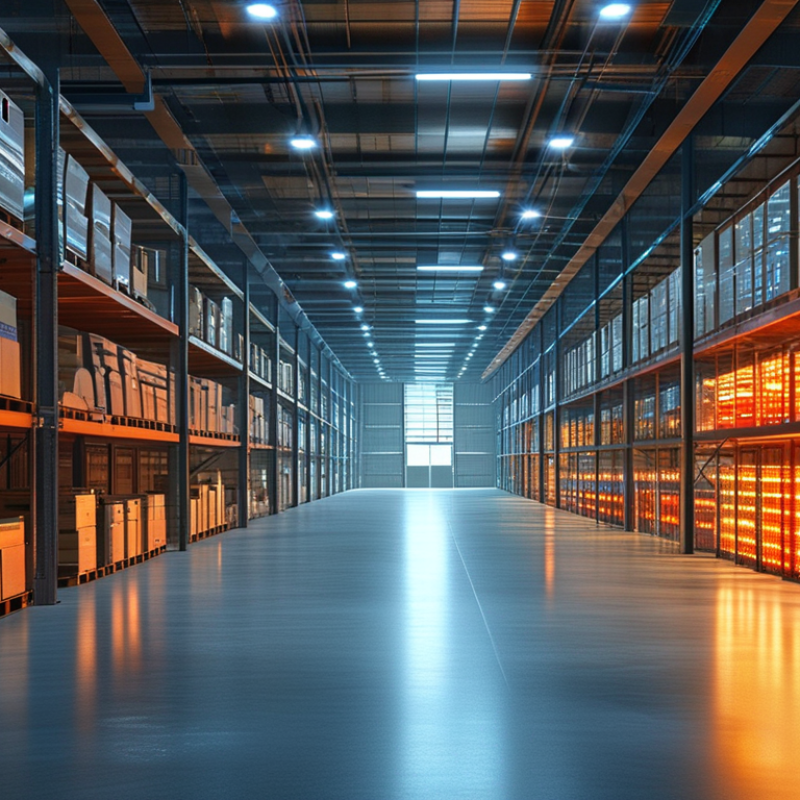
The best 2026 LED solution is not always the brightest fixture. It is the system matched to the space, schedule, and visual task. The U.S. Department of Energy states that LEDs can use at least 75% less energy and last up to 25 times longer than incandescent lighting. This makes them especially effective in warehouses, factories, parking areas, and public corridors where lamps operate for long hours. High-bay LEDs with occupancy sensors can reduce wasted illumination above empty aisles. In cold storage rooms, suitable thermal ratings matter more than decorative design.

Offices and schools benefit from low-glare fixtures, daylight dimming, and adjustable color temperature. Street lighting gains value from precise optics, which place light on roads instead of nearby windows. The International Energy Agency reported that LEDs represented about half of global lighting sales in recent years, showing how quickly efficient lighting has moved into everyday infrastructure. However, adoption alone does not guarantee good performance. A poorly positioned LED can create harsh shadows, screen reflections, or uncomfortable brightness.

Field planning should include illuminance measurements, maintenance access, and controls that staff can understand. Sensor settings may need adjustment after installation. Real rooms behave differently from drawings. The payback calculation can also overlook disposal, wiring changes, and worker preferences. For 2026 projects, connected monitoring is useful where energy data supports action, not where it merely produces another dashboard. Careful commissioning remains essential.

What Are the 2026 Best LED Lighting Solutions? — Where Are Advanced LED Solutions Used Most Effectively?
LED Solution Most Effective Application Typical Efficacy Recommended Light Quality Key Control Features Typical Energy Reduction* Important Design Considerations
High-Bay LED Systems Warehouses, logistics centers, manufacturing floors, sports halls and aircraft hangars 130–190 lm/W 4,000–5,000 K; CRI 80+ for general industrial work Occupancy sensing, daylight harvesting, scheduled dimming and networked zoning Up to 50–75% compared with traditional high-intensity discharge systems Use suitable optics for mounting height, control glare carefully and consider dust, heat and impact ratings.
LED Troffers and Flat Panels Offices, classrooms, healthcare corridors and commercial interiors 100–160 lm/W 3,000–4,000 K; CRI 80–90; low-glare options for computer work Continuous dimming, occupancy sensors, daylight response and personal lighting controls Up to 40–65% compared with fluorescent fixtures Choose low-glare optics and appropriate luminance to reduce visual discomfort and screen reflections.
LED Street and Area Lighting Roads, pedestrian paths, parking areas, campuses and public spaces 110–180 lm/W 2,700–4,000 K; CRI 70–80 for roads and 80+ for pedestrian areas Adaptive dimming, motion response, astronomical scheduling and remote monitoring Up to 50–75% compared with older roadway and area-lighting technologies Use full cut-off optics, accurate photometry and appropriate color temperature to limit glare and sky glow.
Connected Smart LED Lighting Large offices, retail buildings, campuses, hotels and mixed-use facilities 100–180 lm/W for the luminaire 2,700–5,000 K; CRI 80–90 depending on the space Wireless or wired networking, occupancy analytics, daylight harvesting, asset monitoring and scene control Typically 50–80% when efficient fixtures and advanced controls are combined Plan for cybersecurity, interoperability, commissioning, sensor placement and long-term software support.
Tunable-White LED Systems Healthcare, education, hospitality, offices and spaces requiring flexible ambience 80–150 lm/W Adjustable white light, commonly about 2,700–6,500 K; CRI 80–90 Time-based color tuning, daylight synchronization, scene presets and centralized control Approximately 20–60% compared with conventional lighting, depending on operating schedules and controls Use documented color consistency, suitable dimming ranges and lighting schedules that support the intended visual task.
LED Horticultural Lighting Indoor farms, vertical farms, nurseries and greenhouse supplemental lighting 2.0–3.5 µmol/J for many commercial fixtures Designed around plant needs, commonly using blue, green and red wavelengths; spectrum varies by crop Photoperiod scheduling, dimming, environmental integration and zone-based recipes Often 30–60% lower electricity use than older horticultural lighting systems Evaluate photosynthetic photon efficacy, uniformity, thermal management, crop response and fixture moisture protection.
LED Lighting for Retail and Display Shops, museums, galleries, showrooms and architectural displays 90–150 lm/W CRI 90+; high R9 performance for vivid reds and accurate merchandise appearance Dimming, scene setting, track adjustment and timed display control Up to 40–70% compared with halogen and other legacy display sources Control beam angle, glare, heat and ultraviolet exposure; verify color consistency across fixtures.
Solar-Powered LED Outdoor Lighting Remote roads, parks, walkways, security areas and locations without reliable grid access 100–180 lm/W for the LED luminaire 3,000–4,000 K; CRI 70–80 for general outdoor use Photocells, motion sensing, scheduled dimming and battery-state monitoring Can eliminate operational grid electricity use at the point of installation Size the photovoltaic panel and battery for local solar conditions, winter autonomy, temperature and maintenance access.
Rugged Wet-Location LED Fixtures Food-processing areas, parking structures, workshops, tunnels and outdoor industrial environments 110–170 lm/W 3,500–5,000 K; CRI 80+ for general visibility Occupancy detection, low-temperature operation and centralized scheduling Up to 40–70% compared with fluorescent or high-intensity discharge alternatives Specify suitable IP protection, impact resistance, cleanability, corrosion resistance and operating-temperature range.
*Energy-reduction figures are typical planning ranges. Actual results depend on the existing technology, operating hours, illuminance targets, controls, maintenance practices and local conditions. Efficacy and lifetime values should be verified from independent photometric and product test data before procurement.

How Should Buyers Compare, Install, and Maintain LED Systems?

Buyers should compare LED systems by delivered light, not advertised wattage. Check lumens, beam angle, colour temperature, glare control, and colour-rendering performance. The U.S. Department of Energy’s 2023 Solid-State Lighting R&D Opportunities report highlights efficacy, controls, reliability, and visual quality as continuing priorities. A bright fitting can still fail if it creates glare or uneven lighting.

Installation affects real performance. Measure the room, ceiling height, mounting surface, and heat exposure before choosing equipment. LEDs dislike trapped heat, despite their low energy use. The International Energy Agency’s Energy Efficiency 2023 report identifies efficient lighting as a major electricity-saving opportunity, but savings depend on correct operation. Add occupancy sensors or daylight controls where usage changes throughout the day. Commission the system after installation, then record lux readings at working surfaces. My experience suggests this step is often skipped. That is a mistake.

Tips: Request photometric files, warranty conditions, driver details, and flicker data. Compare total ownership cost, not purchase price. Clean lenses and vents on a planned schedule. Inspect discolouration, buzzing, and delayed startup. Replace failed drivers promptly. Keep spare components. Maintenance records make future decisions easier, although many facilities still rely on memory. Recheck lighting levels after furniture, partitions, or work patterns change.

What Are the 2026 Best LED Lighting Solutions?

Typical luminous efficacy by LED application. Higher efficacy delivers more light from each watt, but buyers should also compare glare control, color quality, thermal design, controls, and warranty terms.

Compare

Use delivered lumens, efficacy, color rendering, glare ratings, operating temperature, controls compatibility, and expected L70 life rather than wattage alone.

Install

Confirm electrical compatibility, mounting clearances, heat dissipation, emergency-lighting requirements, light distribution, and local code compliance before installation.

Maintain

Keep optics and heat sinks clean, inspect connections and controls, check illumination levels periodically, and replace failed drivers or modules with compatible parts.

Values are representative non-brand benchmarks for commonly specified LED systems; actual performance varies by product design, temperature, optics, and operating conditions.