Edison LED Lighting

Projects
10 Best LED Strip Lights for 2026?
Choosing the right lighting can change how a room feels, from a focused desk corner to a softly lit hallway. A Led Strip may look simple, yet brightness, color quality, adhesive strength, and power options vary widely. The best choice depends on where it will go, how often it will run, and whether you prefer app controls or a basic remote.
This guide compares ten LED strip lights for 2026 through practical features shoppers can assess. We consider light output, color settings, strip length, installation needs, and compatibility with common smart-home systems. Small details matter. A bright strip may suit a kitchen counter but feel harsh behind a television. A flexible connector can help around a corner, while weak adhesive may need extra preparation on dusty or textured surfaces. Product specifications are useful, but they do not always reveal how a strip looks in your own room.
No strip is perfect. Some models offer vivid colors but limited white-light adjustment; others are easy to install yet provide fewer controls. That trade-off deserves attention. Product versions, prices, and app features can change, so check current manufacturer details before buying. The picks ahead are intended to narrow your options, not promise a flawless match. Measure the installation area, confirm the required power supply, and consider whether you need indoor or outdoor-rated lighting. A little planning can prevent an expensive mismatch.
How LED Strip Lights Work and Where They Are Used
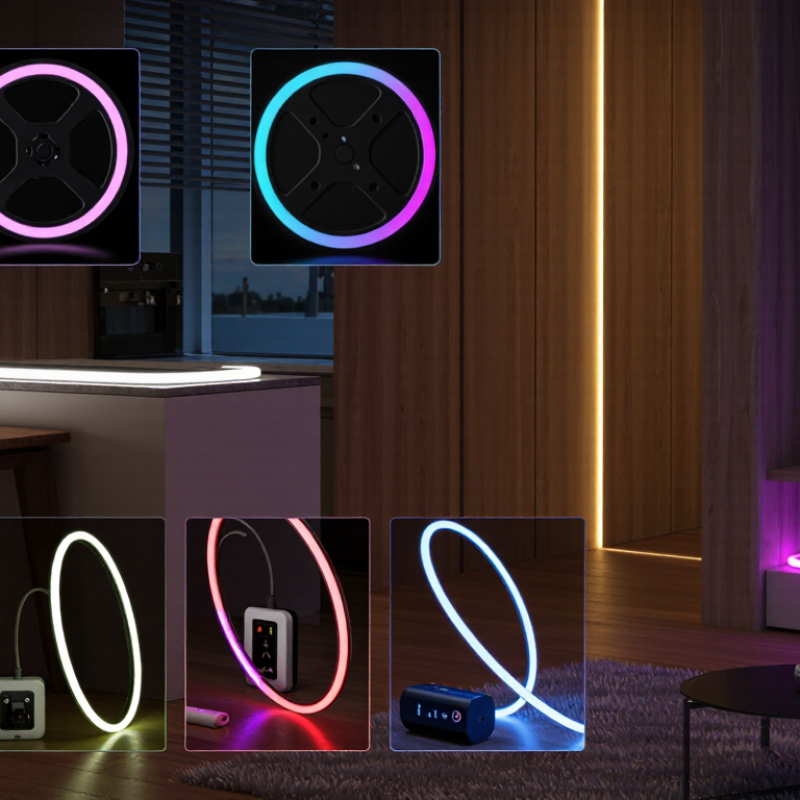
LED strip lights are flexible circuit boards carrying small light-emitting diodes, or LEDs. When electricity flows through each diode, it produces light with relatively little heat compared with many older lighting types. A strip’s brightness and color depend on its LEDs, circuit design, and power supply. Some strips show one fixed color; others use a controller to adjust brightness or create color effects. Simple, but not magic.
Many strips can be cut at marked points, though cutting elsewhere may damage the circuit. Under-cabinet strips can brighten a countertop, while concealed strips behind a television or shelf create a gentle glow. They also work along stair edges and inside display cabinets. On stairs, they should not replace proper lighting. A narrow strip can look bright in a photograph but still leave steps hard to see.
Installation details matter. Check the required voltage and total wattage before choosing a power supply, and avoid placing a high-output strip in a tightly enclosed space where heat can build up. For bathrooms or outdoor areas, check the product’s water-resistance rating and follow its installation instructions. I’d also test the strip in place before fixing it permanently; adhesive can lose grip on dusty or uneven surfaces. The tidy-looking plan is not always the practical one.
10 Best LED Strip Lights for 2026? - How LED Strip Lights Work and Where They Are Used
A practical comparison of ten LED strip types, selected for different lighting needs. Voltage and construction are typical examples; actual specifications vary by product.
| LED Strip Type | How It Works | Typical Power | Best Use | Installation Notes |
|---|---|---|---|---|
| 1. Single-color white | Uses white LEDs at one fixed color temperature. | Commonly 12 V or 24 V DC | Under-cabinet task lighting, shelves, and simple accent lighting. | Choose a color temperature that suits the room; cut only at marked points. |
| 2. Tunable white (CCT) | Combines warm- and cool-white LEDs so the color temperature can be adjusted. | Commonly 12 V or 24 V DC | Bedrooms, living areas, and workspaces where lighting mood changes. | Requires a compatible CCT controller; check whether the strip uses two or more channels. |
| 3. RGB color-changing | Red, green, and blue LEDs mix to create a range of colors; white may look less natural than dedicated white LEDs. | Commonly 12 V or 24 V DC | Decorative room accents, gaming areas, and party lighting. | Needs an RGB controller; all LEDs on a basic strip generally display the same color at once. |
| 4. RGBW | Combines RGB LEDs with a separate white LED channel for colored effects and dedicated white light. | Commonly 12 V or 24 V DC | Rooms that need both colorful accents and practical white illumination. | Use an RGBW controller and power supply rated for the strip’s total load. |
| 5. RGB+CCT | Provides RGB color effects plus adjustable warm-to-cool white light, using separate LED channels. | Commonly 12 V or 24 V DC | Flexible living-room, bedroom, or hospitality lighting. | Check controller channel compatibility and total wattage before installation. |
| 6. Addressable digital RGB | Individually controlled LEDs or LED groups display moving patterns and multiple colors along one strip. | Often 5 V or 12 V DC, depending on the design | Animated accents, signs, and custom DIY lighting projects. | Requires a compatible data controller; follow the specified data direction and power-injection guidance. |
| 7. COB continuous-light strip | Many closely spaced LED chips create a more continuous-looking line of light than widely spaced individual LEDs. | Commonly 12 V or 24 V DC | Visible channels, display shelves, and smooth-looking indirect light. | Use a compatible dimmer and power supply; an aluminum channel can help manage heat and protect the strip. |
| 8. High-density SMD strip | Uses closely spaced surface-mount LEDs to reduce visible gaps compared with lower-density strips. | Commonly 12 V or 24 V DC | Task lighting and installations where individual light points should be less noticeable. | Check LED spacing, brightness, and heat requirements; density alone does not determine light output. |
| 9. Outdoor-rated strip (IP65 or IP67) | A protective coating or enclosure helps resist dust and water; the exact protection depends on the tested assembly. | Often 12 V or 24 V DC | Patios, covered outdoor areas, and locations exposed to splashes or rain when suitably rated. | IP65 generally indicates dust-tight protection and water-jet resistance; IP67 covers specified temporary immersion tests. Protect cut ends and connections. |
| 10. USB-powered low-voltage strip | Runs from a compatible USB power source, commonly at 5 V; available power limits brightness and usable length. | Typically 5 V DC | TV backlighting, desk accents, and other short indoor runs. | Check the USB supply’s current rating and the strip’s power requirements; avoid overloading the port. |
How LED strip lights work: LEDs convert electrical energy into light. A power supply provides the required DC voltage, while a controller can adjust brightness, color, or patterns. Match the supply and controller to the strip’s voltage, channel type, and total power demand.
Related Posts
-
How to Choose LED Strip Lights in 2026?
-
10 LED Strip Buying Tips for Global Buyers
-
Why Choose LED Strip Lights for Global Sourcing?
-

Exploring the Efficiency of Linear Lighting Solutions Against Traditional Alternatives
-

What Are the 2026 Best LED Lighting Solutions?
-
China Top 10 LED Track Light Manufacturers for Global Buyers